
Reference / Case study 11 / Food & beverage
Tipiak: making one brand platform work across three aisles
The work developed the Tipiak brand platform with the teams, then translated it into usable criteria for communication, innovation, packaging and the broader marketing mix across dry grocery, ready meals and appetiser occasions.
- Client
- Tipiak
- Industry group
- Food & Beverage
- Specific industry
- Food & Beverage
- Expertise
- Brand platform, packaging and innovation deployment
- Market
- France
- Engagement
- Brand platform and operational deployment
- Case
- 11
- LED AT
- Brainvalue
Context
Tipiak: making one brand platform work across three aisles
Tipiak is a French food company founded in 1967 through the coming together of Maison Groult and Établissements Billard. Its portfolio spans ambient dry grocery, cereal dishes and puff pastry bases as well as frozen ready meals and savoury or sweet appetiser products.
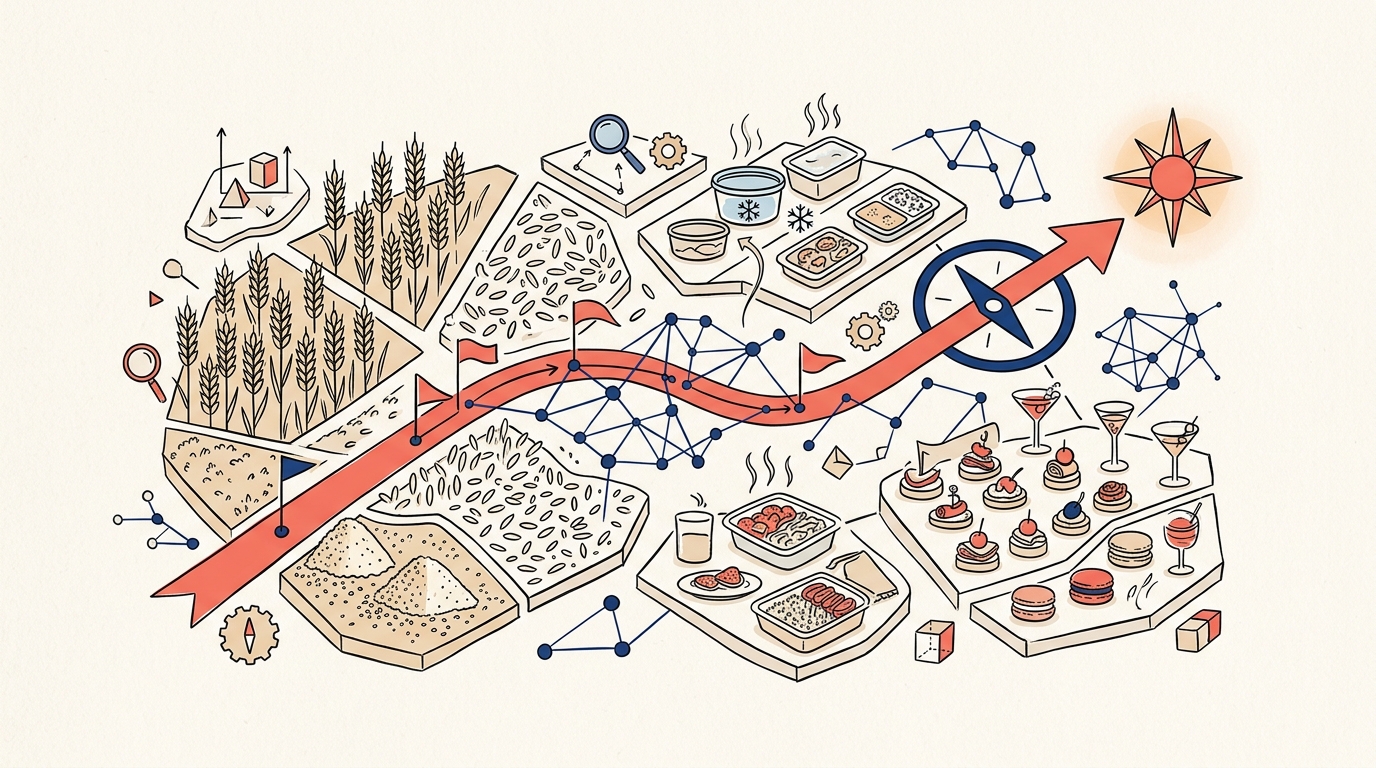
The structural difficulty was not product diversity alone. A shopper encounters Tipiak in three different parts of the store, at three different moments and with three purchase logics: an ingredient such as semolina, a convenient ready meal, or a pleasurable occasion to share.
In 2023, Terrena acquired control of Tipiak and the group left the Paris stock exchange. The brand work therefore had to be sufficiently explicit to remain useful through a change of ownership and organisation.
A brand platform is not proved on a diagram. It is proved when it can settle a packaging, innovation or communication decision in a real aisle.
Strategic challenge
The questions that structured the work
Our approach
From analysis to usable decisions
Start with purchase situations
Read the distinct shopping and consumption moments before writing a common platform. A shopper does not browse a portfolio; they move through a store.
Separate shared from category-specific proof
Identify what the name can credibly promise everywhere and what must remain specific to dry grocery, ready meals or appetiser occasions.
Build with the people who will apply it
Construct the platform collaboratively with the teams responsible for communication, innovation and packaging.
Translate the platform into criteria
Turn it into message hierarchy, expression territory, visual rules and innovation permissions that teams can use in briefs and on pack.
Hand over decision rules
Equip teams to treat new or unforeseen cases consistently, without reopening the platform at every launch.
Research and work conducted
What the engagement covered
- Analysis of purchase and consumption moments across the portfolio's three worlds.
- Analysis of brand perception and the gap between category contexts.
- Identification of proof points that are shared across the brand or specific to one category.
- Collaborative construction of the brand platform with the relevant teams.
- Translation into communication, innovation, packaging, range, price, channel and activation criteria.
- Decision rules for cases not anticipated by the initial work.
Business value
A reading that makes trade-offs easier
One recognisable brand
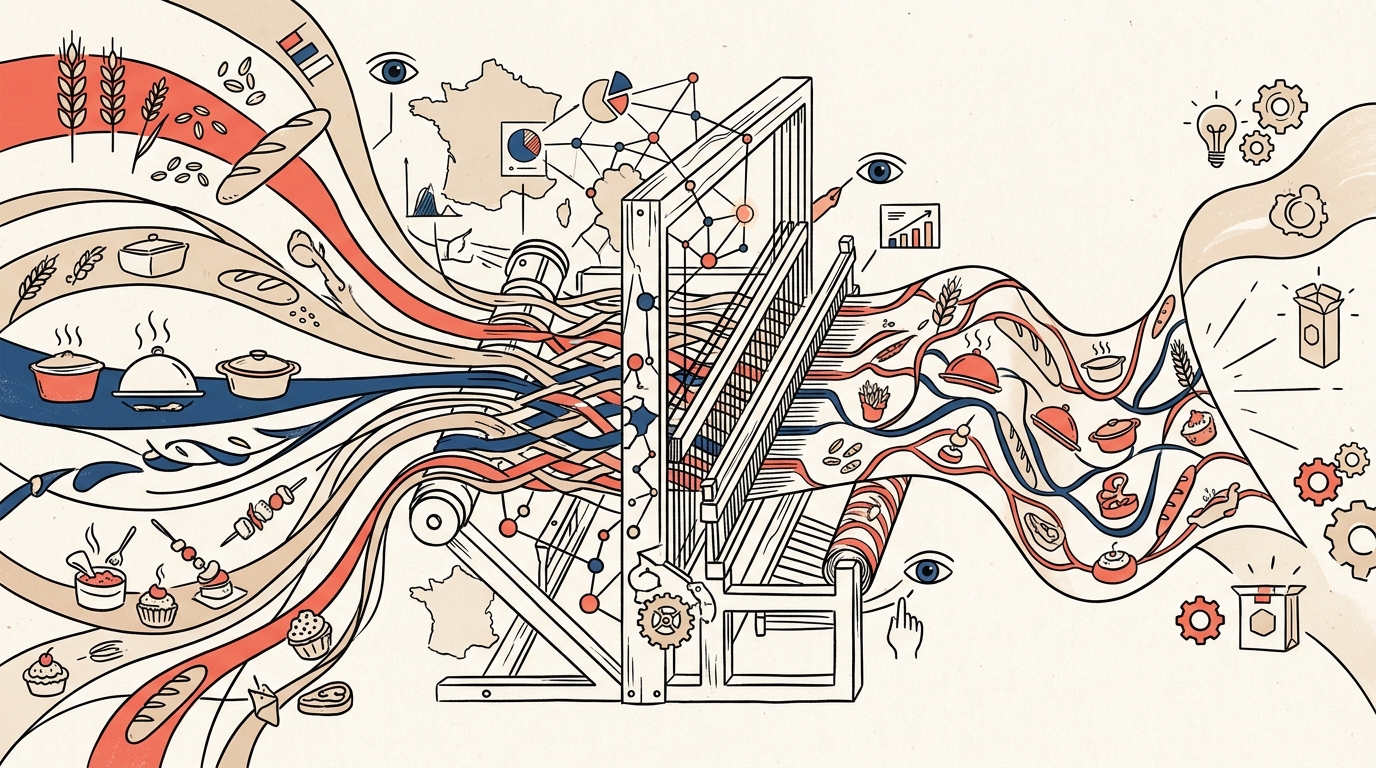
Coherent translation turns three separate shelf encounters into one cumulative brand presence.
Faster trade-offs
Concrete criteria turn recurring debates into rule application across pack, launch and communication decisions.
An innovation filter
A clear permission perimeter eliminates diluting ideas before they consume development time.
A platform that remains
A platform built with teams and accompanied by rules can survive a change of ownership or organisation.
Deliverables
Objects teams can use beyond the engagement
- A brand platform built to cover three distinct purchase contexts.
- A distinction between cross-portfolio and category-specific proof points.
- Communication and expression criteria for briefs and activation.
- Packaging principles covering visual hierarchy and information priority.
- Innovation criteria defining what the brand can legitimately extend into.
- Reusable decision rules for future cases.
Key learnings
What this case makes clear
- A platform that excludes nothing arbitrates nothing, and a platform that arbitrates nothing will not be used.
- Three aisles mean three brand encounters that have to be reconciled.
- Packaging translation is not execution after strategy; it is the moment strategy becomes verifiable.
- A platform received by teams is archived; a platform built with them is used.
- Without a rule for unforeseen cases, deployment has to be redone at the first unplanned launch.
FAQ
Frequently asked questions
What is brand platform deployment?
It is the conversion of a strategic platform into criteria that can guide communication, packaging, innovation, range, price, channel and activation decisions.
Why does a multi-aisle brand need specific deployment rules?
The shopper meets each category with different expectations. A shared platform has to maintain recognition without flattening the realities of each purchase situation.
Why is packaging central to deployment?
It forces strategic choices into observable hierarchy: brand, category, recipe, proof and visual expression all have to become concrete.
What makes a platform actionable?
It changes a decision in a brief or on a shelf. If it does not settle anything, it remains descriptive rather than strategic.
Why include decision rules for unforeseen cases?
They let teams apply the platform to future launches without treating every new situation as an exception.