
Reference / Case study 29 / Healthcare & pharmaceuticals
Sanofi: immunity is not a scientific category in people's minds, it is a theory of the body
The project covered decoding cultural beliefs, consumer behaviours and competitive ecosystems around immunity across Southeast Asia and South America, with the objective of identifying growth and innovation opportunities.
- Client
- Sanofi
- Industry
- Healthcare & pharmaceuticals
- Expertise
- Cultural insight · Consumer insight · Opportunity mapping
- Subject
- Immunity: beliefs, behaviours and competitive ecosystems
- Markets studied
- Southeast Asia · South America
- Geography
- Asia · Americas
- Engagement type
- Cultural decoding and identification of growth and innovation opportunities
- Consultant
- Aurélie Plessier
- Case No.
- 29
- LED AT
- Brainvalue
Context
Sanofi: immunity is not a scientific category in people's minds, it is a theory of the body
The word "immunity" is the first problem in the subject. In medical language it designates a precise set of biological mechanisms. In people's minds it designates something else: a general strength, a reserve that fills and empties, a resistance that depends on what you eat, on tiredness, on cold, on the body's balance. Those two definitions coexist without meeting.
Until you have established what people believe immunity to be, you cannot map opportunities: you map a category that exists only for the company. This case describes that preliminary decoding work and what it changes. The opportunities identified, the conclusions and proprietary client data are not disclosed.
A subject that has become central and remains ill-defined: Immunity has established itself as one of the principal territories of consumer health, and its importance grew after the pandemic period. It is also one of the least stabilised subjects: it covers at once a biological reality, an everyday preoccupation and a set of inherited practices.
Market studies converge on one point: Asian and Latin American consumers are among those most actively seeking foods and drinks supporting immune health, and most likely to value functional ingredients.
A competitive ecosystem that is not the one you would expect: The most decisive point concerns the nature of the competition. In Vietnam, herbal products are reported to represent more than 70% of the health supplements market, reflecting a marked cultural preference for traditional remedies over modern pharmaceutical products.
The reasons given are explicit: plant-based products are perceived as safer and associated with fewer side effects than synthetic formulations. Ginseng is particularly popular there, and that preference rests on a long tradition of using plants in everyday health management, reinforced since the pandemic. Turmeric, ginger and other plants are advancing across several markets, with growing integration of traditional medicine into modern formulations.
A lay theory of the body: People do not think about their health in terms of mechanisms. They think in terms of forces, balances and reserves. Immunity, within that logic, resembles a capital that is spent and replenished: tiredness empties it, cold attacks it, certain foods recharge it, certain excesses exhaust it.
That lay theory is not an error to be corrected: it is the grammar in which decisions are made. A brand speaking another language can be scientifically impeccable and remain inaudible.
What that changes for opportunity identification: The likely strategic challenge was therefore twofold: to establish what immunity actually means in each context, then to derive a competitive perimeter corresponding to the reality of trade-offs rather than to the industry's nomenclature.
An opportunity identified on the basis of an administrative category — supplements, over-the-counter products — describes a shelf, not a need. An opportunity identified on the basis of a need describes a demand that several types of offer compete for, including offers that appear in no sector study.
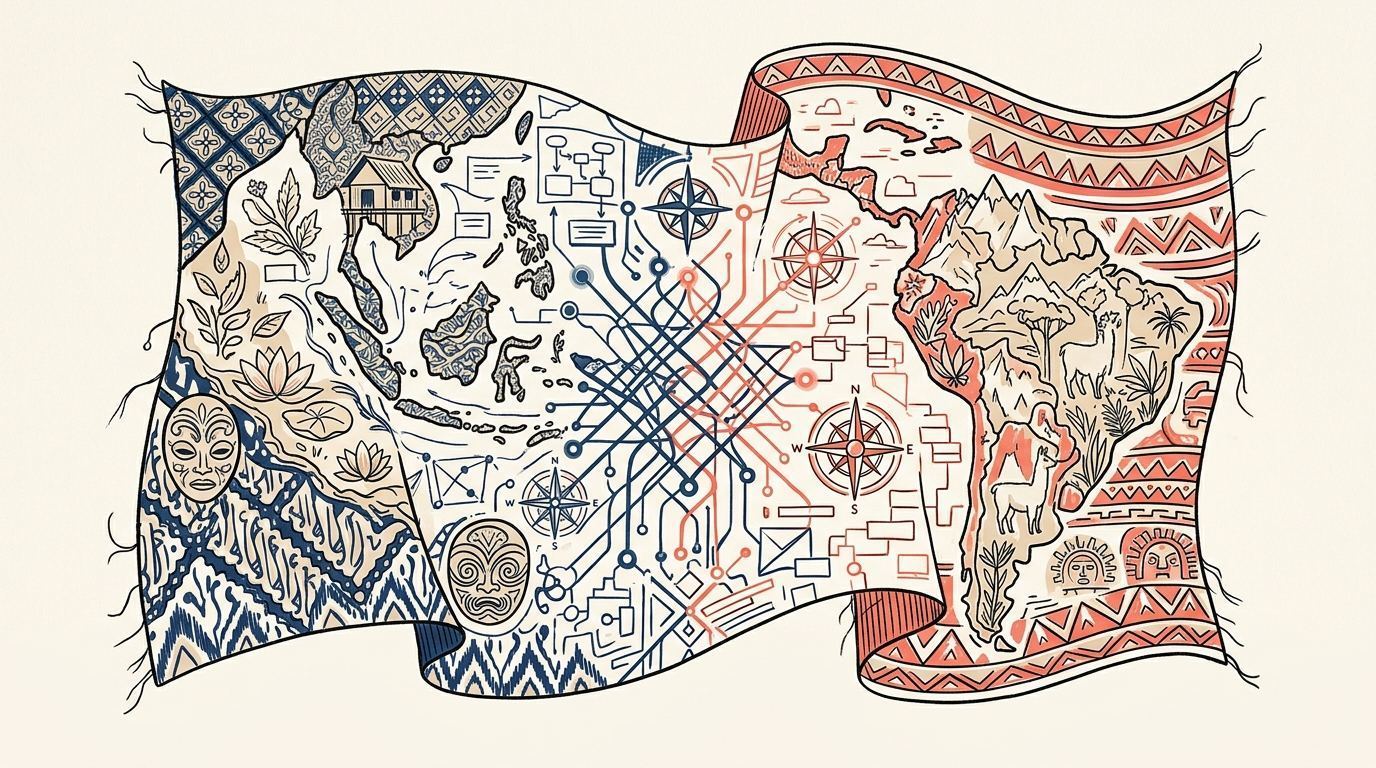
Two regions, not one model: Southeast Asia and South America share a strong attachment to traditional remedies, but the belief systems underlying them differ profoundly — medical traditions, the relationship to hot and cold, the family's place in decisions, the pharmacist's status. Surface resemblance is a classic trap: it encourages a shared reading that describes neither.
The work was framed around questions of this kind:
In these markets, the competitor to an immunity product is not another laboratory. It is a root, a soup, a tea and a grandmother's advice.
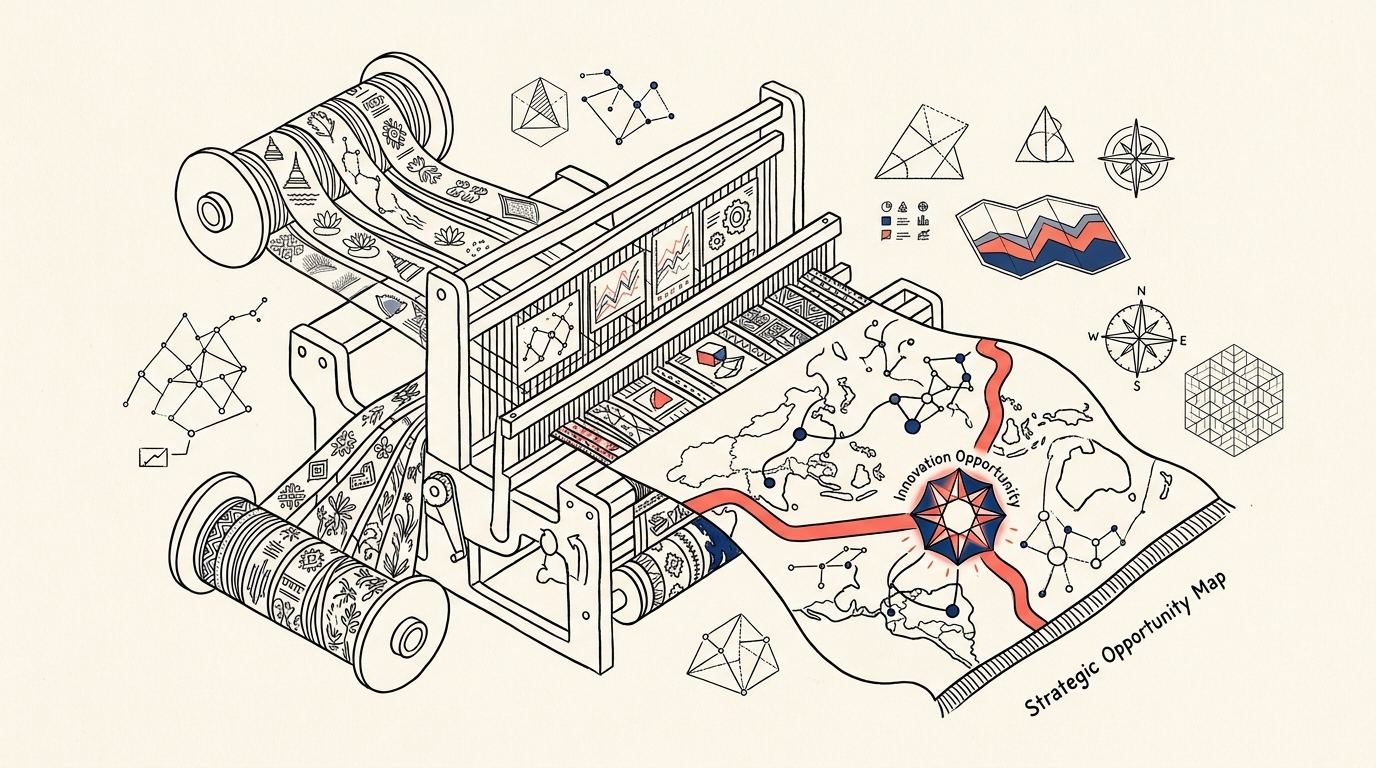
Strategic challenge
The questions that structured the work
Our approach
From analysis to usable decisions
Decode the word before studying the category
Understand what immunity covers in local language and representations. Without that step, any measurement addresses a category that exists only in classifications.
Reconstruct the lay theory of the body
Identify the implicit logic connecting tiredness, food, climate, balance and resistance. That logic explains behaviour; medical knowledge does not.
Redefine the competitive perimeter by need
List everything competing for the same need, including traditional remedies, foods and domestic practices. A perimeter defined by regulation describes an industry, not a market.
Map opportunities onto the map of beliefs
Position existing supply — modern and traditional — on the map of local representations to surface poorly served needs.
Separate shared from local before concluding
Distinguish what recurs across both regions from what remains strictly national. Surface resemblance between markets attached to traditional remedies is a frequent trap.
Research and work conducted
What the engagement covered
- The first question is the one quantitative research cannot pose. It requires listening before measuring, failing which you measure responses to a vocabulary people do not use.
- The approach rests on one principle: you establish what the subject means locally first, and what the market contains second.
- The gap between medical and lived vocabulary: The terms used by the industry are not those used by people. Asking questions in category vocabulary produces compliant answers with no explanatory value.
- The temptation to correct beliefs: A scientific organisation has a natural reflex: to rectify what is inaccurate. On this subject, that reflex prevents understanding. Describing a belief is not endorsing it; it is recognising that it steers real decisions.
- A competitive perimeter invisible in the data: Home remedies, family preparations and foods consumed for health purposes appear in no market share study. They nonetheless constitute a significant share of real competition.
- False resemblance between regions: Southeast Asia and South America share an attachment to traditional remedies, but their belief systems differ. Producing a synthesis too early erases what has value.
- Constraints on health claims: What can be asserted about an immunity-related product is strictly framed and varies by country. A real opportunity can prove impossible to formulate legally.
- Internal heterogeneity of markets: Cities and rural areas, generations, income levels and health systems vary sharply within each country. A single national reading produces an average that describes nobody.
Business value
A reading that makes trade-offs easier
Innovation that answers the real demand
Designing from what people believe rather than from what the category contains avoids the most frequent situation in consumer health: a technically superior product that does not meet its need.
An accurate competitive perimeter
Including traditional remedies and domestic practices in the analysis avoids overestimating your position by counting only competitors visible in the data.
An expression that becomes audible
Speaking the language in which decisions are made increases a message's reach without changing anything in the product.
Finer regional allocation
Separating what is shared from what is local avoids industrialising across two regions an answer relevant in only one.
Deliverables
Objects teams can use beyond the engagement
- A decoding of what immunity covers in local representations, region by region.
- A reconstruction of the implicit logic connecting tiredness, food, climate and resistance.
- A map of the real competitive ecosystem, including non-pharmaceutical offers.
- An identification of the moments that trigger concern about immunity.
- A reading of the advice sources actually consulted.
- An opportunity map positioned on the map of beliefs rather than of categories.
- An explicit distinction between cross-regional observations and local specificities.
Key learnings
What this case makes clear
- Immunity is not a scientific category in people's minds; it is a theory of the body made of forces, reserves and balances.
- A lay theory is not an error to correct: it is the language in which decisions are made.
- The competitor to an immunity product is often not another laboratory but a food, a plant or a domestic practice.
- A competitive perimeter defined by regulation describes an industry; one defined by need describes a market.
- Asking questions in category vocabulary produces compliant answers with no explanatory value.
- Two regions attached to traditional remedies can hold opposing belief systems. Surface resemblance is a trap.
FAQ
Frequently asked questions
What does immunity mean to consumers across cultures?
Rarely what it means in biology. In most everyday representations, immunity works as a general strength or a reserve: it empties with tiredness, is attacked by cold, recharges with certain foods and is exhausted by excess. That logic varies with local medical traditions — the relationship to hot and cold, the place of plants, the role of everyday food — and it determines behaviour far more than medical knowledge does. A brand expressing itself in biological vocabulary can be impeccable and remain inaudible.
How do you decode cultural beliefs around health?
By listening before measuring, and by provisionally giving up the category's vocabulary. Questioning people in industry language produces compliant answers with no explanatory value. The work consists of gathering how people spontaneously describe their body, what weakens it and what strengthens it, then reconstructing the implicit logic connecting those elements. That logic does not have to be accurate to be strategically decisive: it is the frame within which trade-offs are made.
How do you define the real competitive perimeter of a health product?
By starting from the need rather than the regulatory category. A perimeter defined by classification — over-the-counter medicines, food supplements — describes an industry and a shelf. A perimeter defined by need lists everything competing for the same preoccupation: traditional remedies, foods consumed for health purposes, home preparations, family advice. Across several Southeast Asian and South American markets that non-pharmaceutical competition is the majority, and it appears in no market share study.
Why does traditional medicine compete with pharmaceutical products?
Because it answers the same preoccupation with a different legitimacy. In Vietnam, herbal products are reported to represent more than 70% of the health supplements market. The reasons given are a perception of greater safety and fewer side effects compared with synthetic formulations, together with a long tradition of using plants in everyday health management, reinforced since the pandemic. This is therefore not competition on price but on trust, which calls for a very different response.
How do you identify growth opportunities in consumer health?
By mapping existing supply onto the map of local beliefs rather than onto the map of product categories. Opportunities appear where an identifiable preoccupation — a moment of tiredness, a change of season, an exam period, a return to activity — meets supply that is absent, poorly adapted or lacking credibility in the public's eyes. Validation then requires three checks: the reality of the preoccupation, the brand's credibility on that ground, and the legal possibility of formulating the promise in the target country.