Reference / Food and beverage / Materne and GoGo squeeZ
Materne and GoGo squeeZ: organising innovation from portfolio enrichment to brand expansion
Two related innovation engagements in the MOM and Bel ecosystem: enriching Materne's portfolio through occasions and architecture, and exploring credible expansion routes for GoGo squeeZ beyond its children's core.
- Clients
- Materne & GoGo squeeZ (Bel Group)
- Industry
- Food & Beverage
- Expertise
- Innovation, portfolio and brand expansion
- Markets
- Europe and United States
- Engagement
- Workshops and capability building
- Group context
- MOM / Bel Group
- LED AT
- Brainvalue, June Marketing, Labbrand
Context
Materne and GoGo squeeZ: organising innovation from portfolio enrichment to brand expansion
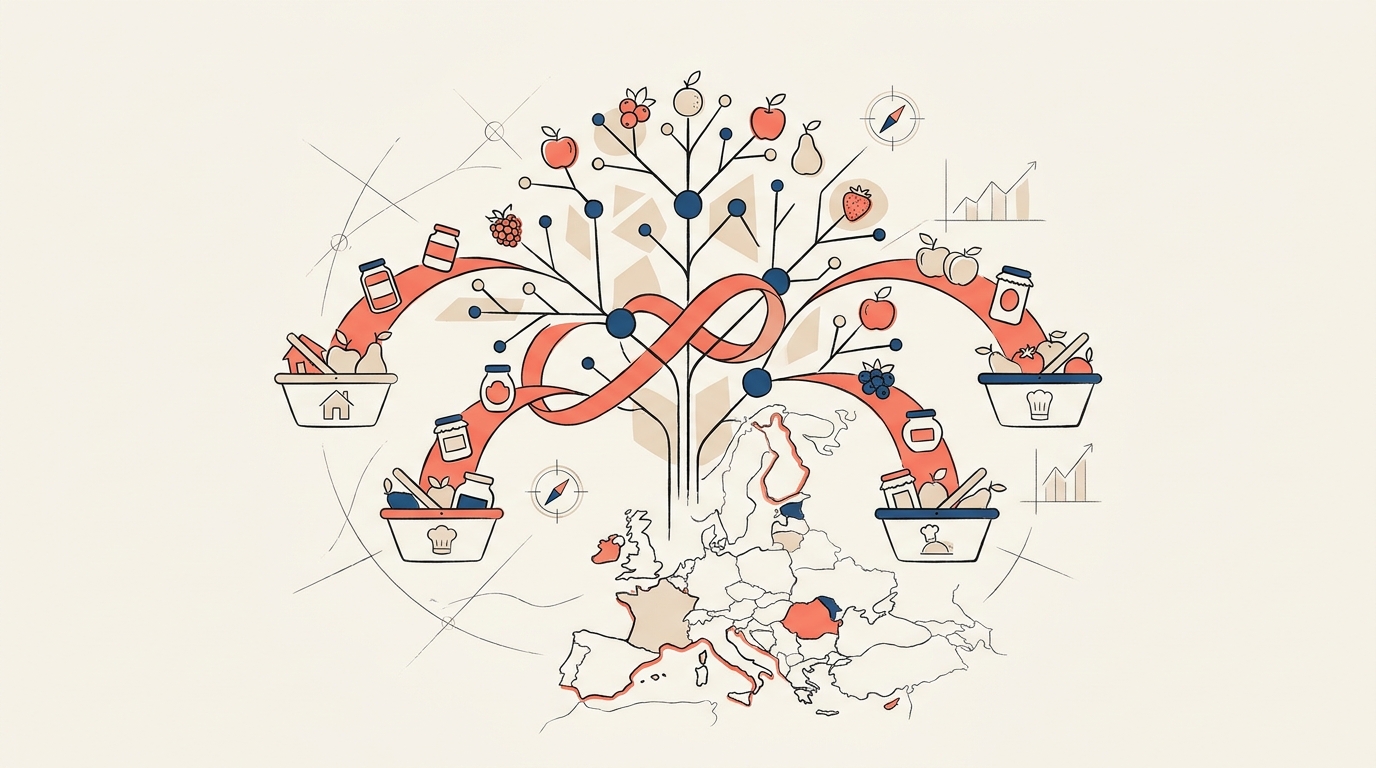
The Materne work focused on enriching an existing portfolio: identifying product opportunities, clarifying brand roles and equipping teams with better creativity formats. The key constraint was that every idea had to find a useful place in a structure already occupied.
The GoGo squeeZ work addressed the inverse question: how to move beyond a powerful children's core without losing the permission that makes the brand credible. It explored new audiences, adjacent categories and emerging need states without treating them as the same growth route.
In a growth exploration, the difficulty is not producing ideas. It is knowing which ideas the brand has the right to carry.
Strategic challenge
The questions that structured the work
Our approach
From analysis to usable decisions
Start from lived situations
Map occasions and need states before looking at ranges, products or demographic targets.
Define the permission perimeter
Identify what the brand can credibly do, what needs to be documented and what sits outside its legitimacy.
Separate the vectors
Treat new audiences, adjacent categories and emerging needs as distinct questions with distinct risks.
Design before facilitating
Compose the group, stimuli, constraints, selection criteria and outputs before the workshop begins.
Make the method reusable
Separate divergence from convergence and leave teams with formats they can use on the next project.
Research and work conducted
What the engagement covered
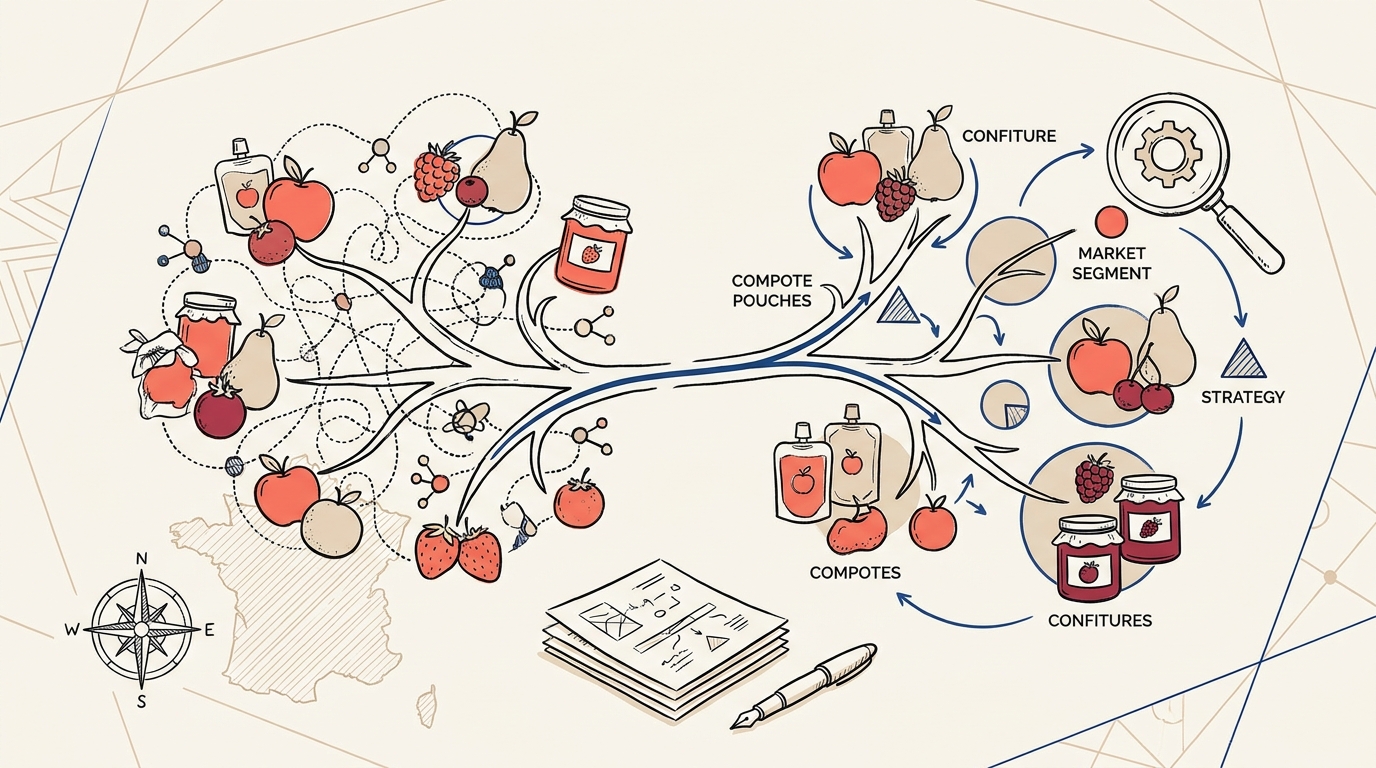
- Mapping consumption occasions, portfolio overlaps and gaps for Materne.
- Clarifying brand roles and rules for deciding where an innovation should sit.
- Designing and facilitating innovation workshops using design-thinking approaches.
- Exploring GoGo squeeZ expansion through audiences, adjacent categories and need states.
- Designing creativity and brainstorming training that addresses documented limits of conventional group brainstorming.
Business value
A reading that makes trade-offs easier
Differentiation beyond price
Occasion and role mapping identifies territories that private label cannot easily occupy.
A more coherent pipeline
Clear roles produce fewer projects, but projects that reinforce rather than compete with one another.
Faster decisions
An explicit rule for where an innovation belongs prevents the same debate reopening in every committee.
Internal capability
Teams leave with generation, selection and facilitation formats that remain usable after the workshops.
Deliverables
Objects teams can use beyond the engagement
- A map of consumption occasions and brand positions across the Materne portfolio.
- A definition of brand roles and innovation-placement rules.
- Structured opportunity routes rather than raw workshop output.
- A GoGo squeeZ permission perimeter and a reading of format constraints.
- Creativity training, reusable workshop formats and explicit selection criteria.
Key learnings
What this case makes clear
- Enriching a portfolio is more constrained than innovating on a blank page.
- An occasion map reveals overlaps that a range review cannot show.
- A format can be a powerful asset and a growth constraint at the same time.
- New audiences, adjacent categories and need states require separate tests.
- The issue with conventional brainstorming is not the group itself, but a format that mixes generation and evaluation.
FAQ
Frequently asked questions
What is a brand permission perimeter?
It describes what audiences accept seeing a brand do without the proposition feeling forced. It is discovered through perception, not declared by the company.
Why start with occasions instead of products?
Occasions reveal what people are trying to do, where a portfolio overlaps and which moments are genuinely left unserved.
What is a need state?
It is the combination of a functional need, an emotional state and a context at a particular moment. It is not a demographic target or a product category.
Why separate divergence and convergence in workshops?
Generating ideas and judging them at the same time reduces both volume and quality. Separating the phases improves the usefulness of the group.
How does portfolio architecture support innovation?
It clarifies which roles are already filled and where a new product would add a real contribution rather than duplicate an existing offer.