
Reference / Case study 30 / Digital health & wellness
Headspace: in Brazil, a meditation app's competitor is not another app
The project covered decoding local cultural insights and defining differentiation pillars to support Headspace's launch strategy in Brazil.
- Client
- Headspace
- Industry
- Digital health & wellness
- Expertise
- Cultural insight · Brand positioning · Market entry strategy
- Target market
- Brazil
- Geography
- Americas
- Engagement type
- Local cultural decoding and definition of differentiation pillars supporting the launch strategy
- Consultant
- Aurélie Plessier
- Case No.
- 30
- LED AT
- Brainvalue
Context
Headspace: in Brazil, a meditation app's competitor is not another app
A meditation app is not a culturally neutral product. It rests on a conception of wellbeing formed in the Anglo-Saxon world: an individual, silent, secularised practice, often adjacent to performance and self-mastery. That conception is neither universal nor self-evident.
In Brazil the relationship to mental wellbeing differs on several dimensions at once — the place of the collective, the role of the body and movement, spiritual grounding, and above all a long-standing normalisation of therapy. That entirely shifts the question of the competitive perimeter. Conclusions and proprietary client data are not disclosed.
A fast-growing and already structured market: The Brazilian mental health apps market generated around USD 186.5 million in revenue in 2024, with a projection of around USD 441.3 million by 2030, an expected annual growth of roughly 14.7% between 2025 and 2030.
Brazil also has the highest global prevalence of anxiety disorders, at around 9.3%. In 2022 stress was the most widespread condition there, at roughly 47,000 cases per 100,000 inhabitants, ahead of anxiety and depression. Demand therefore does not need creating: it exists, it is documented and it is substantial.
Competition that is not what you would expect: The most structuring point concerns the competitive perimeter. The Brazilian market includes psychological teleconsultation platforms — Vittude and Zenklub among them — offering direct access to a professional. Recourse to therapy is culturally established there, far more than in most Western markets.
A meditation app is therefore not compared to other meditation apps but to the possibility of speaking to someone. That is not the same proposition, not the same price, and not the same expected benefit.
Analyses also cite three success factors in this market: genuinely localised content in Brazilian Portuguese, personalisation, and a demonstrated willingness to pay for a premium wellness subscription.
A product that carries a culture: Guided meditation as it spread through Western apps rests on a set of implicit assumptions: that wellbeing is an individual matter, that it is cultivated in silence and stillness, that it belongs to personal discipline, and that it is measured in regularity.
None of those assumptions is false, but none is universal. They describe one particular way of approaching calm, born in a specific cultural context and rendered invisible by its success.
What the Brazilian context shifts: Several dimensions of the Brazilian relationship to wellbeing question those assumptions. Social connection plays a decisive part in how difficulty is navigated. The body, movement and music participate in an emotional regulation not separated from social life. Spirituality is present in plural and often syncretic forms. And above all, speaking to a professional is not a last resort but an established practice.
The real challenge of the launch: The likely strategic challenge was therefore to define differentiation pillars from what the Brazilian market actually expects, rather than translating a proposition conceived elsewhere. Translating content into Portuguese is necessary; it is not an entry strategy.
The question of complement rather than substitute: In a market where therapy is normalised, an app can position itself in two ways: as a cheaper alternative, which places it in a direct and unfavourable comparison, or as a complement occupying the moments therapy does not cover — the interval between sessions, the night, the commute, the acute moment. Those two positions call for neither the same product, nor the same price, nor the same narrative.
The work was framed around questions of this kind:
In a market where demand already exists, the entry question is never "how do we convince" but "why us rather than what is already there".
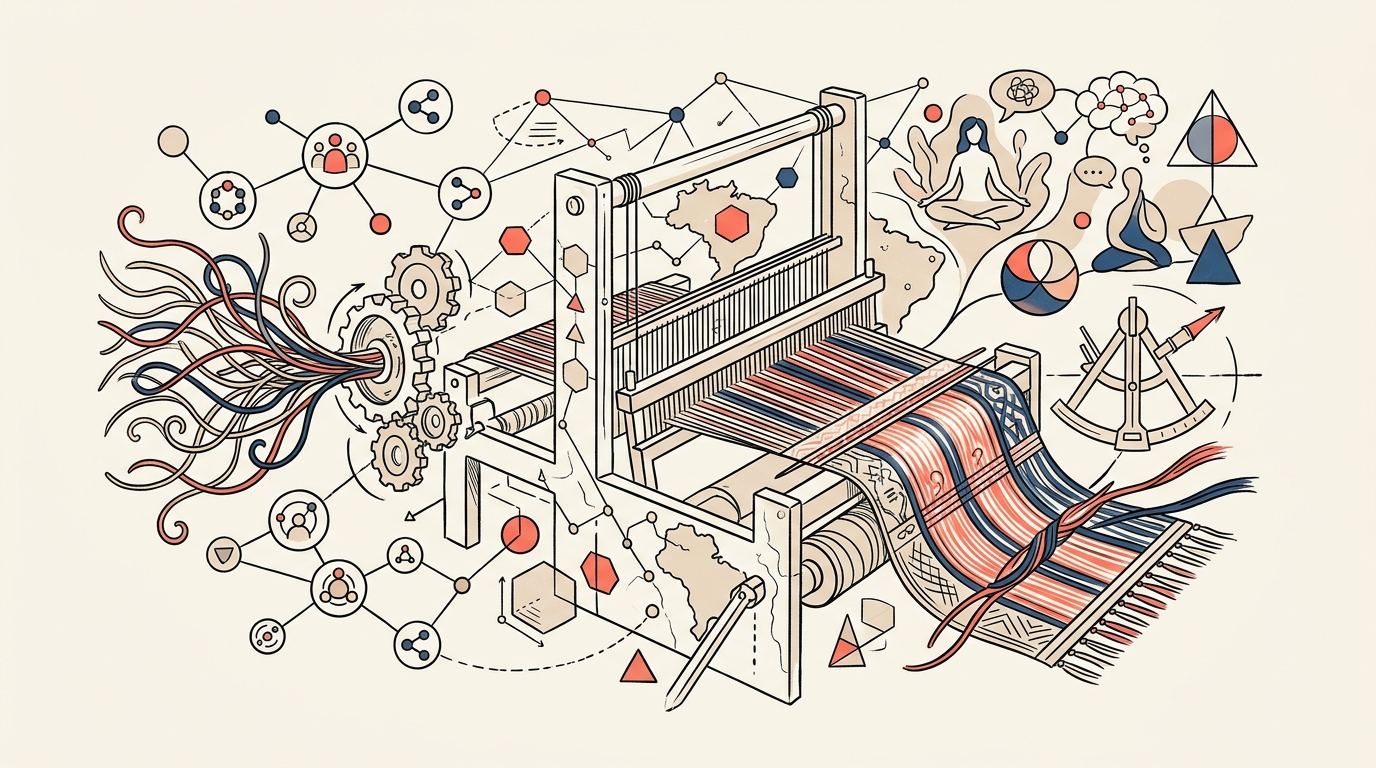
Strategic challenge
The questions that structured the work
Our approach
From analysis to usable decisions
Decode the local relationship to the subject
Understand how mental wellbeing is experienced, named and treated in the local context, independently of category vocabulary. That reading determines whether the original proposition transposes at all.
Establish the real competitive perimeter
List everything competing for the same need: other apps, but also therapy, family and friends, physical practices, spirituality. The category's official perimeter rarely describes lived competition.
Start from behaviour, not stated need
Describe what people actually do in difficult moments. A stated need gives an intention; an observed behaviour gives a space to occupy.
Choose between substitute and complement
Explicitly settle the relationship to the market's dominant offer. Positioning as a cheaper alternative is almost always the weakest stance; occupying what the other does not cover is almost always the most tenable.
Formulate verifiable pillars
Reduce the whole to a small number of differentiation pillars, each grounded in an observation and concrete enough to guide the product as much as the communication.
Research and work conducted
What the engagement covered
- The third question is the most productive. It forces the description of a real behaviour rather than a stated need, and it is from that description that the pillars emerge.
- The approach rests on one principle: before translating a proposition, you establish what the subject means locally and what the product will be compared to.
- The invisibility of original assumptions: The cultural postulates of a successful product are hard to perceive from inside, precisely because they worked. Making them explicit is the first difficulty of the work.
- Comparison with therapy: In a market where speaking to a professional is an established practice, an app is judged against that. Presenting itself as a cheaper equivalent is a losing position.
- Localisation confused with translation: Translated content remains content conceived elsewhere. Localisation requires reviewing references, voices, situations evoked and sometimes the structure of the exercises themselves.
- The sensitivity of the subject: Mental health engages vulnerability. A poorly calibrated tone — too performance-oriented, too light, too prescriptive — produces immediate and lasting rejection.
- The heterogeneity of the country: Brazil is vast and socially contrasted. Practices, beliefs and access to care vary sharply by region and background; a single reading produces an inoperative average.
- The boundary between wellness and care: A wellness app is not a care device, and the boundary has to be held rigorously. It is at once a regulatory constraint and an ethical question.
Business value
A reading that makes trade-offs easier
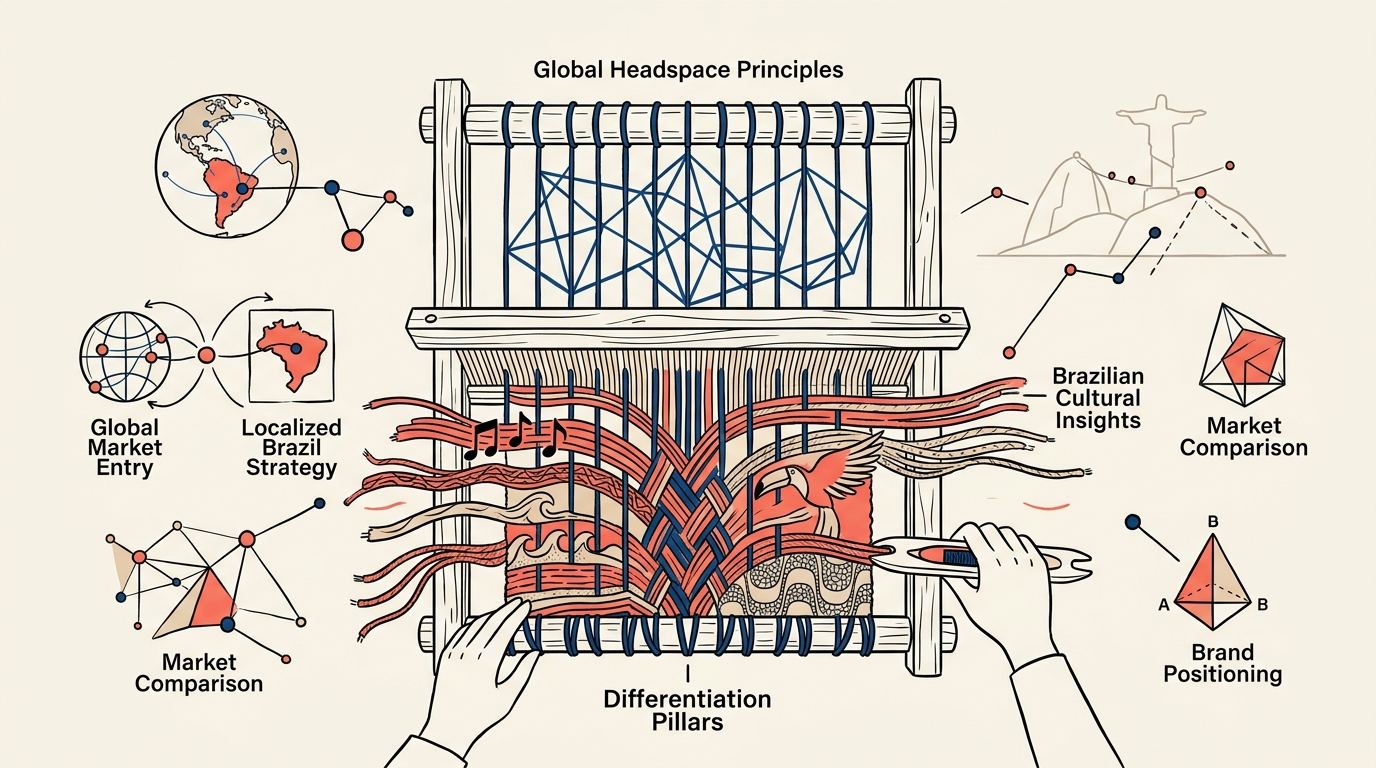
An entry that is not fought on price
Positioning as a complement rather than a cheaper alternative avoids the comparison least favourable to an app facing a professional.
A product adapted rather than translated
Identifying implicit cultural assumptions allows content, tone and exercises to be adjusted, not just the language. That is what distinguishes adaptation from surface localisation.
Better-targeted acquisition
Knowing at which moments and for which uses the app is genuinely relevant allows acquisition to concentrate where conversion is plausible.
A justifiable subscription
In a market where access to a professional is possible, the perceived value of a subscription has to be explicitly built. Clear pillars make that construction possible.
Deliverables
Objects teams can use beyond the engagement
- A decoding of the Brazilian relationship to mental wellbeing in its social, bodily and spiritual dimensions.
- An articulation of the implicit cultural assumptions in the original proposition.
- A map of the real competitive perimeter, including therapy and non-digital recourse.
- A description of real behaviours in difficult moments, and of the moments left uncovered.
- An explicit positioning relative to therapeutic provision: complement or alternative.
- A small number of differentiation pillars, each grounded in an observation.
- Concrete implications for the product, the content, the tone and the subscription model.
Key learnings
What this case makes clear
- A wellness app is not a culturally neutral product: it carries a particular definition of wellbeing.
- The cultural assumptions of a successful product are invisible from inside, precisely because they worked.
- In a market where demand already exists, the question is not how to convince but why us rather than what exists.
- The real competitive perimeter includes therapy, family and friends, and physical practices, not only other apps.
- Positioning as a cheaper alternative to a professional is almost always the weakest stance.
- Translating content is necessary; it is never an entry strategy.
FAQ
Frequently asked questions
How do you adapt a wellness app to a new market?
By starting with the cultural assumptions it carries. Guided meditation as it has spread rests on implicit postulates: that wellbeing is individual, silent, still, a matter of personal discipline and regularity. None is false, none is universal. Genuine localisation requires reviewing references, voices, situations evoked and sometimes the structure of the exercises, according to what the local culture considers calming. Translating content is necessary but does not constitute adaptation.
How do you differentiate in a market where therapy is normalised?
By explicitly choosing to be a complement rather than an alternative. Faced with the possibility of speaking to a professional, presenting yourself as a cheaper equivalent places the product in a comparison it does not win. The tenable position is to occupy what therapy does not cover: the interval between sessions, the night, the acute moment, the commute, people waiting for an appointment. Those two positions call for neither the same product, nor the same price, nor the same narrative.
What are a brand's differentiation pillars?
They are the few elements on which a brand chooses to build preference, expressed concretely enough to guide both product and communication. A pillar is neither a value nor a product attribute: it is an answer to "why us rather than another" that survives the competitor test. Three or four generally suffice. Each must be grounded in an observation and remain true if a competitor matched its offer.
How does the Brazilian digital mental health market work?
It combines substantial demand with already structured competition. The mental health apps market there was estimated at around USD 186.5 million in 2024, with a projection towards USD 441.3 million by 2030, an annual growth of roughly 14.7%. Brazil has the highest global prevalence of anxiety disorders, at around 9.3%. Local psychological teleconsultation platforms such as Vittude and Zenklub offer direct access to a professional, in a country where recourse to therapy is culturally established. These elements should be re-verified before publication.
Why does a digital product not transpose culturally?
Because it embeds a conception of the need it addresses. An interface, a pace, a voice, an exercise length, a way of measuring progress: each of those choices contains an assumption about what does good and how one improves. Those assumptions are invisible from inside, precisely because they worked in the home market. Making them explicit before translating is the first step of a serious market entry, and often the only thing distinguishing adaptation from surface localisation.