
Reference / Case study 20 / Beauty & luxury
Gucci Beauty: giving beauty a version of the House that outlives the collections
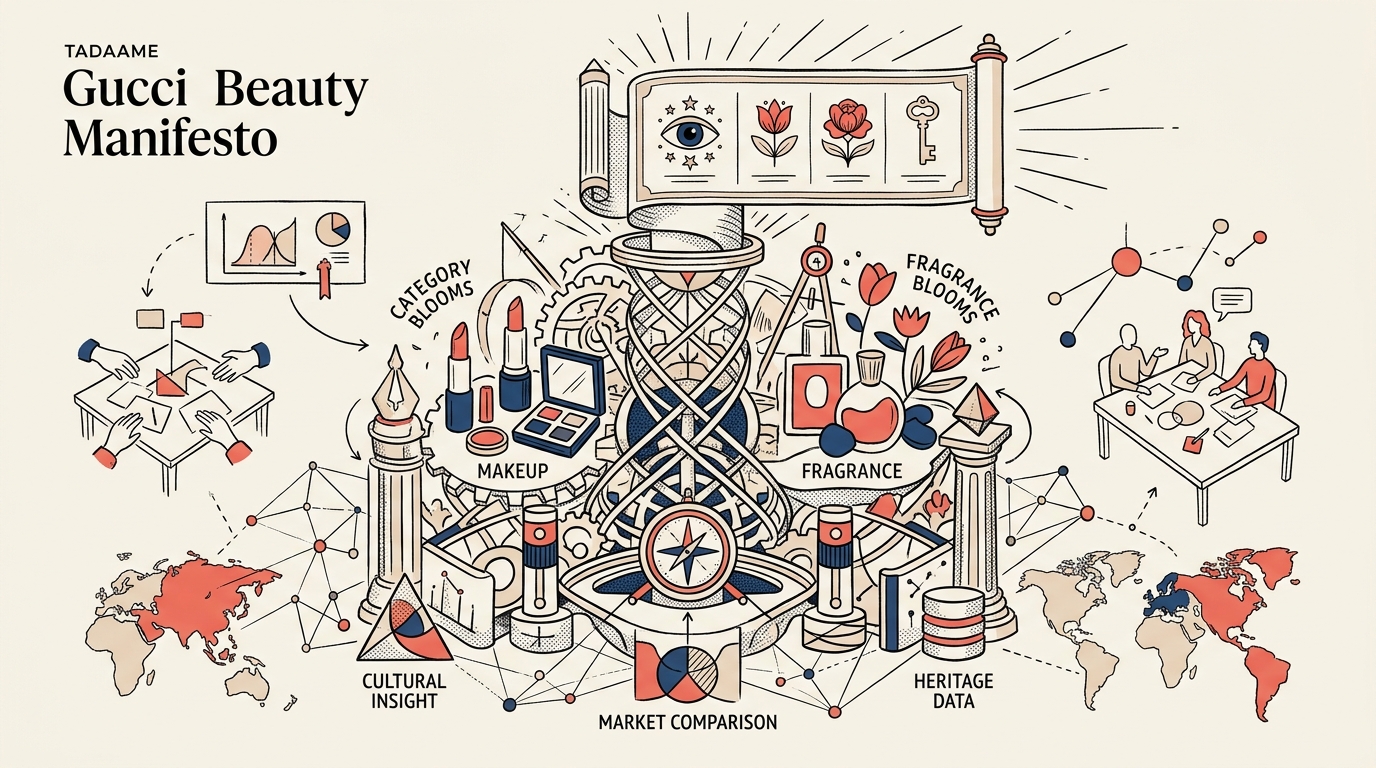
The work supported Gucci Beauty in strengthening the strategic foundations of the category, aligning category strategies with the House's creative vision and fashion identity, and co-writing the Gucci Beauty Manifesto.
- Client
- Gucci Beauty
- Industry group
- Beauty, Fashion & Luxury
- Specific industry
- Beauty & Luxury
- Expertise
- Brand strategy, cultural insight and workshop
- Markets
- Asia, Europe and the Americas
- Engagement
- Strategic foundations and manifesto
- Case
- 20
- LED AT
- June Marketing
Context
Gucci Beauty: giving beauty a version of the House that outlives the collections
Beauty in luxury frequently operates under licence. Gucci's beauty category is developed, produced and distributed by a specialist partner while it must still express the identity of a House it does not direct. That makes alignment an issue of decision architecture, not simply a shared presentation.
Fashion changes by collection and with creative direction. Beauty operates on development cycles of eighteen to thirty-six months, committing to formulas, packaging and distribution before they can be altered. Both belong to the same House, but they do not beat at the same rhythm.
Beauty is also often an accessible first purchase into a luxury House. It has to be faithful to an exclusive world while remaining available, across beauty codes that differ considerably between Asia, Europe and the Americas.
A motif transposes. A conviction translates. The difference decides whether beauty expresses the House or merely traces it.
Strategic challenge
The questions that structured the work
Our approach
From analysis to usable decisions
Separate structural from seasonal
Distinguish lasting House convictions from an individual collection's expression.
Translate, do not transpose
Turn a conviction into a beauty principle rather than reproducing a fashion motif.
Write together
Co-write the manifesto so it is adopted as a creative reference rather than received as a document.
Test cultural reach
Check each statement across Asia, Europe and the Americas, reformulating where necessary.
Derive category decisions
Translate the manifesto into implications for range, shades, textures, price and distribution.
Research and work conducted
What the engagement covered
- A distinction between lasting House convictions and seasonal expression.
- Translation of those convictions into principles applicable to beauty.
- Co-writing of the Gucci Beauty Manifesto.
- A comparative cultural reading across Asia, Europe and the Americas.
- Category implications for range, shades, textures, price and distribution.
- A frame for resolving new cases without additional external input.
Business value
A reading that makes trade-offs easier
Continuity through cycles
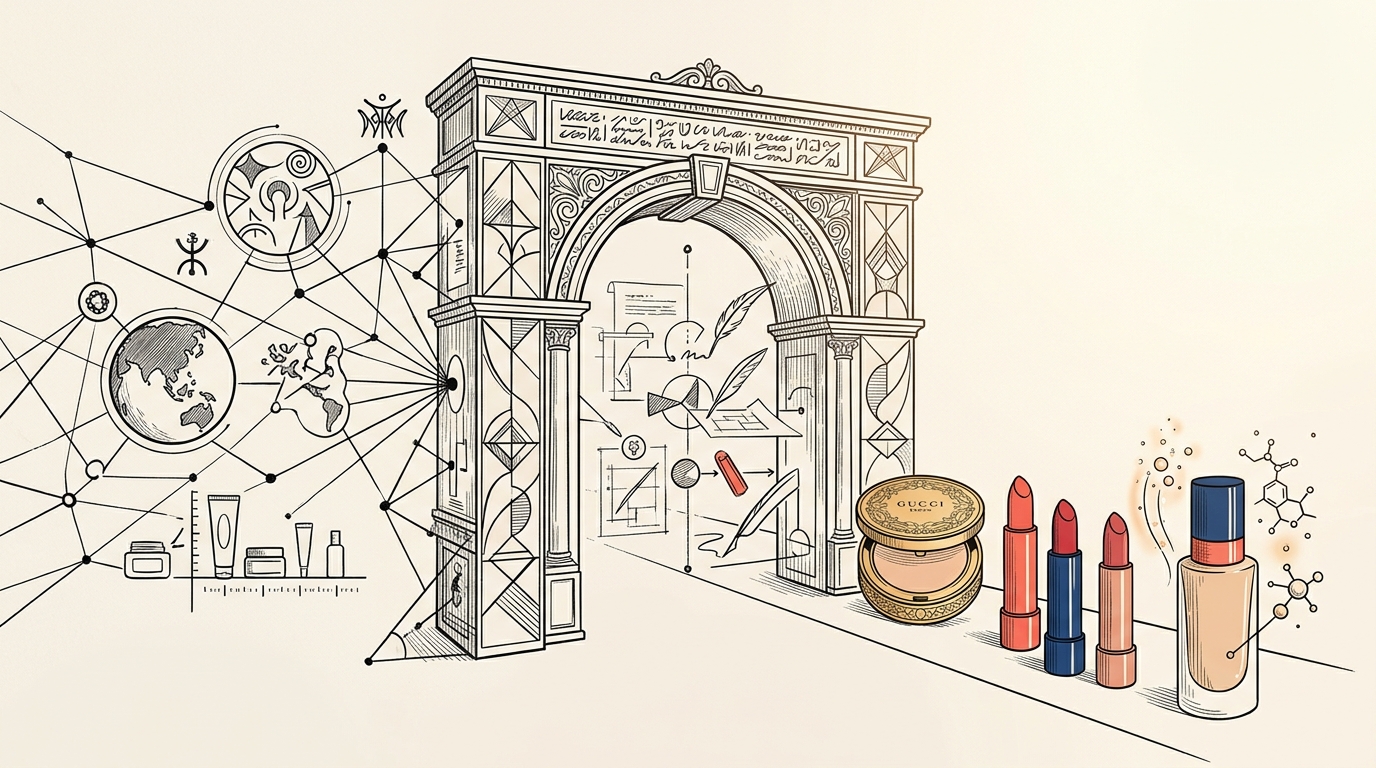
A longer-cycle foundation keeps beauty coherent while collections and creative directions evolve.
Clearer alignment
A co-written text supports arbitration between the House and its category partner.
Recruitment rather than illustration
Beauty can express a House and invite discovery rather than act as a derivative accessory.
Faster creative decisions
A manifesto that states what the category refuses turns recurring debates into shared principles.
Deliverables
Objects teams can use beyond the engagement
- A lasting-versus-seasonal identity reading.
- Beauty principles derived from House convictions.
- The Gucci Beauty Manifesto, co-written with the team.
- Cross-continent cultural insight.
- Category-decision implications.
- A reusable decision frame.
Key learnings
What this case makes clear
- Fashion and beauty belong to the same House but run on different clocks.
- Only convictions, not motifs, can be translated into a long-cycle beauty category.
- A manifesto can mobilise creative teams where a conventional management platform may not.
- Beauty has to be faithful and accessible because it is often a first purchase.
- A foundation tied to a single individual is fragile; it must rest on what belongs to the House.
FAQ
Frequently asked questions
How do you align a beauty category with a fashion-house identity?
Identify what is structural rather than seasonal in the creative vision, translate those convictions into beauty principles and derive decisions on the range, shades, textures and distribution.
What is a brand manifesto for?
It is a text of conviction that states a position in language designed to be read and used. It can frame creative choices by making explicit what the brand stands for and what it rules out.
Why do fashion and beauty run at different paces?
Fashion is renewed by collection; beauty commits to formulas, moulds, packaging and distribution over eighteen to thirty-six months. The strategy must be written for the longer cycle.
How does a beauty licence work in luxury?
A House entrusts development, production and distribution to a specialist partner while retaining oversight of identity. The arrangement needs explicit shared decision rules.
Why is beauty often a luxury House's entry point?
Products such as lipstick offer a more accessible route into an otherwise exclusive world. Beauty must therefore be faithful to the House and accessible at once.