
Reference / Case study 24 / Food & beverage
Clipper Tea: refining the brand platform before opening up innovation, not the other way round
Clipper Tea refined its brand platform with qualitative consumer insight before a UK innovation workshop explored European growth opportunities. The sequence gave the teams a frame for deciding which ideas belonged to the brand and which did not.
- Client
- Clipper Tea (Clipper Teas)
- Industry group
- Food & Beverage
- Industry
- Tea, infusions, organic consumer goods
- Expertise
- Brand platform, innovation strategy and facilitation
- Workshop location
- United Kingdom
- Opportunity scope
- Europe
- Engagement
- Platform refinement and innovation workshop
- Geography
- Europe
- LED AT
- June Marketing
Context
A purpose-led tea brand confronting a different kind of growth question
The project ran in two phases. First, Clipper teams refined the brand platform on the basis of qualitative consumer insights. Second, an innovation workshop in the United Kingdom identified growth opportunities at European scale.
The sequence was the point. Innovation workshops often begin with idea generation and only later seek a brand platform capable of accommodating the output. That produces a portfolio pulling the brand in several directions and a platform written to exclude nothing. Here, the platform came first and became the workshop's frame and filter.
Clipper is a British tea brand founded in 1984 in Beaminster, Dorset, by Lorraine and Mike Brehme. Its history includes early Fairtrade and organic commitments and a plastic-free, unbleached teabag. Since 2012, the brand has belonged to Royal Wessanen, now Ecotone, giving a British brand a European growth horizon across very different tea cultures.
A brand platform is not there to summarise what a brand has achieved. It is there to say what it will do and what it will not.
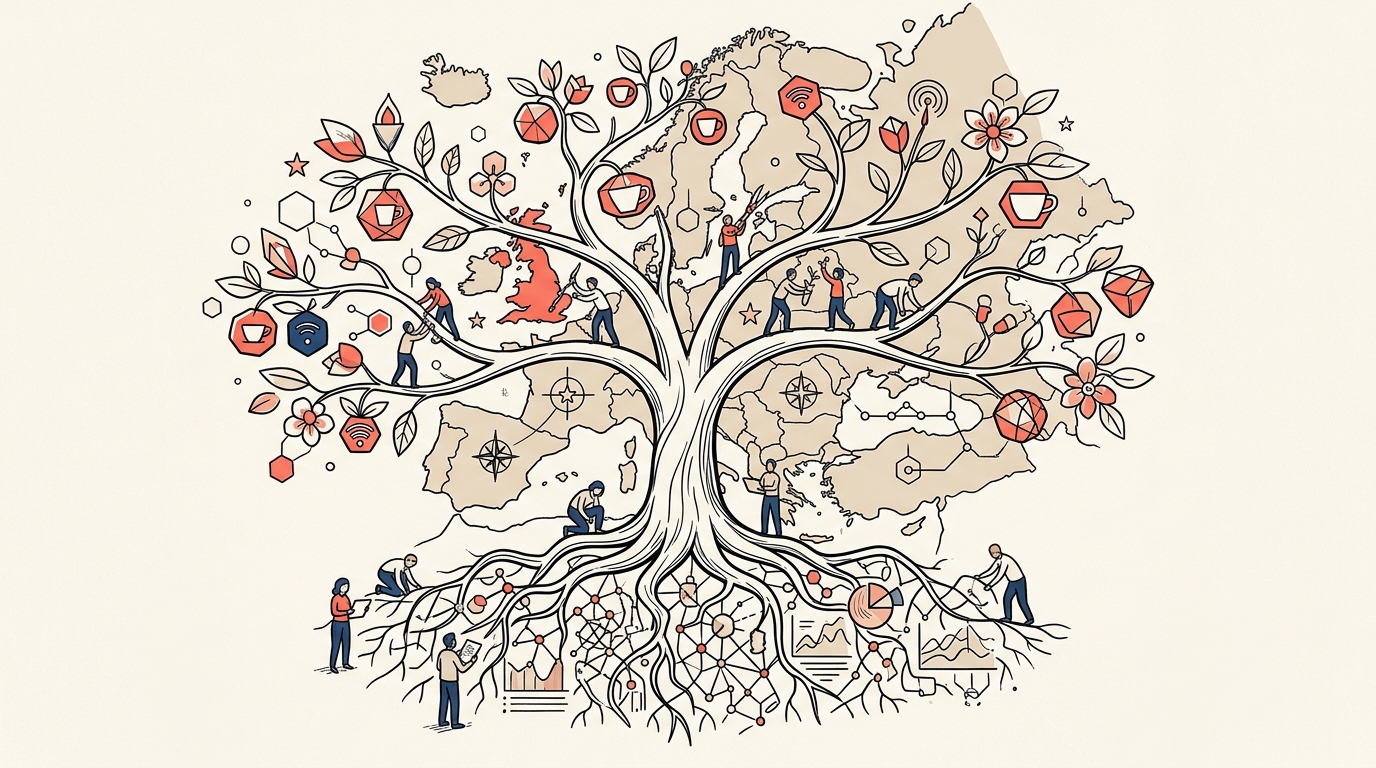
Market reading
The UK, Germany and France do not mean the same thing by tea
The workshop was held in the UK but explored European growth. That makes the difference between national consumption cultures a strategic input, not a background detail.
| Lens | United Kingdom | Germany | France |
|---|---|---|---|
| What tea often means | Black tea, often with milk, an everyday drink | Herbal and fruit infusions first | Green tea and infusions in a lifestyle and premium register |
| Published category structure | Black tea around 45.6% share in 2025 | Herbal and fruit infusions close to 68% of volume | Green tea and infusions are dominant |
| Market reading | Value growth alongside a continuing volume decline | Largest European market, around 24% regional share in 2025 | One of Europe's leading markets for organic infusions |
| Workshop implication | The spontaneous starting point for British participants | A black-tea-led idea can lose relevance | Premium formats and occasions create another horizon |
Strategic challenge
Moving beyond the wearing-out of firsts
Being first is a perishable asset. Fairtrade, organic certification and reduced packaging plastic are increasingly category expectations rather than distinctive positions. The strategic task was not to abandon the commitment, but to restate what Clipper contributes today once precedence alone no longer creates preference.
A second tension concerns growth. The category is moving towards matcha, functional infusions, cold brew and self-care rituals - formats and occasions that sit at some distance from the traditional black teabag. A brand can pursue them and dilute, or ignore them and marginalise itself. A refined platform is the instrument that helps arbitrate.
A third tension came from the workshop format. A predominantly British room can naturally produce British ideas. For European opportunities, Germany, France and other continental markets must be deliberately brought into the room through stimuli, expertise and explicit testing.
The business questions that structured the work
Problems and constraints encountered
- The commoditisation of commitment
- Internal attachment to the founding story
- Separating recurring qualitative patterns from striking but isolated verbatim
- Heterogeneous consumption cultures
- Organic sourcing and industrial feasibility
- The risk of an inspiring workshop with no subsequent conversion
Our approach
Platform first, innovation second
An innovation workshop without a frame produces ideas. A framed innovation workshop produces decisions.
Listen before restating
Start with qualitative insight: what people genuinely value, what the category has normalised and what remains poorly served. Repetition matters more than the most memorable phrase.
Refine the platform with the teams
Rework the platform with the people who will use it. Ownership is built in the argument over what stays, what changes and what is excluded.
Translate the platform into innovation territories
Create a limited set of coherent exploration spaces: open enough for ideas, bounded enough to protect the brand.
Design the workshop before running it
Compose the group, define stimuli and outputs, and put continental market realities in the room before the session begins.
Convert and rank
Sort routes by coherence with the platform, opportunity, industrial feasibility and market relevance. Leave with a sequence of priorities, not a wall of sticky notes.
Research and work conducted
Qualitative insight, category reading and collaborative facilitation
The exact research design, workshop content, concepts and recommendations remain confidential. The confirmed scope and the nature of the work can be described.
- Using qualitative consumer insight to understand what is valued in the brand, expected from the category and still poorly served.
- Comparing the brand discourse with the language consumers actually use.
- Collaboratively refining the Clipper brand platform with the teams.
- Reading category shifts: volume decline, the rise of infusions, matcha, functional products and self-care rituals.
- Comparing British and continental tea cultures and their implications for the same product idea.
- Qualitatively reading volume brands, premium brands and organic specialists.
- Designing the workshop: participants, sequence, stimuli and output formats.
- Facilitating the UK workshop and structuring outputs into ranked opportunity territories.
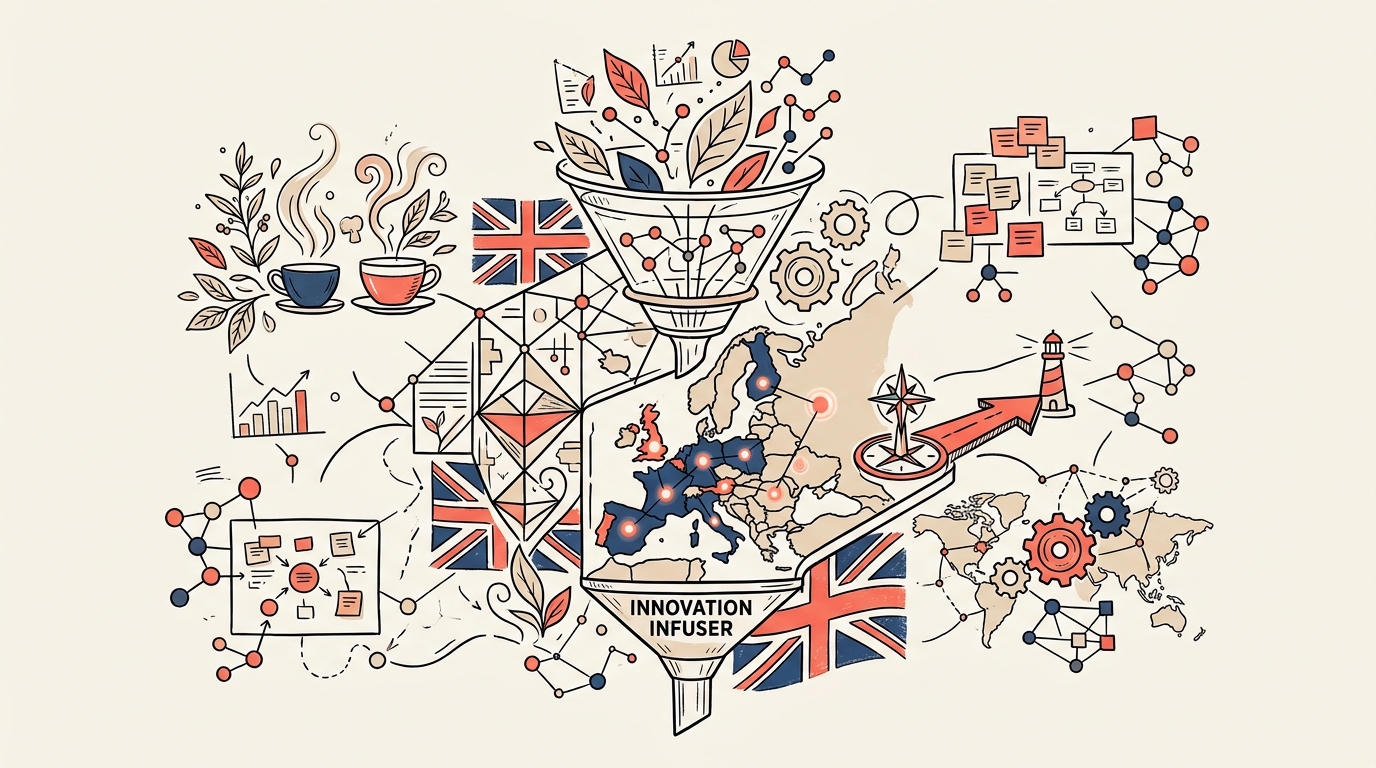
Deliverables produced
A frame that lets the business keep deciding
- A synthesis of qualitative consumer insights, separating recurring patterns from isolated signals.
- A refined brand platform written to be usable in briefs and decisions.
- A set of innovation territories translating the platform into exploration spaces.
- A fully designed workshop: composition, sequence, stimuli and output formats.
- Workshop outputs structured and ranked rather than handed back raw.
- A reading of opportunities by European market, separating transferable routes from strictly local ones.
- A decision frame for sorting future projects without needing a new external intervention.
Business value and potential impact
Less idea volume, more strategic momentum
No client performance figures or proprietary decisions are disclosed. The business value of this form of work can nonetheless be explained precisely.
A shorter, more coherent pipeline
Bounded territories produce fewer projects but projects that reinforce each other rather than disperse. The saving occurs in developments abandoned midway.
A platform that gets used
A platform refined with teams and immediately tested through a workshop is more likely to guide daily choices than one delivered and filed away.
Better local-to-European allocation
Testing a route by market during the workshop avoids funding a development conceived for one country while assuming it will travel across five.
Protection against dilution
For a purpose-led brand, each poorly framed extension can erode credibility. An explicit frame protects the asset better than case-by-case vigilance.
Key learnings
What this case makes clear
- Order matters: platform first, innovation second.
- When the category catches up with a pioneering commitment, change the argument rather than raise the volume.
- A workshop is largely decided in its design, before facilitation begins.
- A single-country workshop addressing multi-country growth must deliberately bring target markets into the room.
- In qualitative work, repetition is more decision-useful than the most striking verbatim.
- A workshop without conversion can durably demobilise the people who participated.
FAQ
Frequently asked questions
Should a brand platform be refined before or after an innovation workshop?
Before, in most cases. Defined upstream, the platform gives the workshop both a frame and a sorting criterion. Without it, teams tend to generate attractive but divergent ideas that are justified after the fact by a platform that cannot arbitrate future choices.
How do you design an innovation workshop that leads to decisions?
Start before the session: bring in the right functions, define bounded territories, prepare relevant stimuli and decide the output format. If the workshop ends only with sticky notes, conversion will not happen. The design does most of the work.
How can a UK workshop identify European opportunities?
Other markets must be deliberately present through stimuli, market expertise and explicit testing. Otherwise, a workshop mechanically produces ideas modelled on the habits of the country in which it takes place.
What should a purpose-led brand do when its commitments become category standards?
Do not merely claim them louder. The brand can raise the standard, move the argument towards a new source of preference, or use verifiable precedence where consumers still value it. Qualitative insight helps decide which route is credible.
Where is growth in tea and infusions in the UK and Europe?
Public category reporting points to infusions, matcha, functional products and self-care occasions. But the answer varies by market: black tea remains central in the UK, while herbal and fruit infusions are structurally stronger in Germany and green tea and infusions have a more premium lifestyle role in France.
Contact