Reference / Case study 41 / Wine & spirits
Arvitis: in wine, all reasoning starts from the plot — consumer centricity asks you to reverse it
The project focused on designing and delivering training programmes to strengthen marketing teams' capabilities in brand strategy, consumer centricity and the practical application of consumer insights.
- Client
- Arvitis
- Industry
- Wine & spirits
- Expertise
- Training · Consumer centricity · Brand strategy
- Subject
- Strengthening marketing team capabilities
- Geography
- Europe
- Nature of the engagement
- Design and delivery of training programmes in brand strategy, consumer centricity and the application of insights
- Consultant
- Aurélie Plessier
- Case no.
- 41
- LED AT
- Labbrand
Context
Arvitis: in wine, all reasoning starts from the plot — consumer centricity asks you to reverse it
The context matters. Arvitis is a family group founded by Alain Thiénot, bringing together champagne houses and wine estates in Champagne, Bordeaux and California, across some 560 hectares. As across the sector, the culture is first a production culture: a wine's identity comes from the plot, the vintage and the blend.
That is what makes consumer centricity hard to install. It is not a technique to be added but a reversal in the direction of reasoning: starting from use rather than from origin. Training that merely hands over tools therefore produces nothing; a habit of thought has to change. Detailed programme content and the client's proprietary data are not disclosed.
A multi-house family group: Arvitis is a family group born of Alain Thiénot's activity, a Champagne broker who became a house owner from 1985 onwards. It brings together champagne houses and estates in Champagne, Bordeaux and California, across some 560 hectares, with its own distribution structure.
That configuration creates a particular situation for a marketing function: several houses, several appellations, several histories, and teams who need a shared language without being given a shared positioning.
A culture that starts in the vineyard: In wine, product identity is built upstream. The plot, the vintage, the grape varieties, the blend and the cellar master's work determine what will be in the bottle, ahead of any market consideration.
That direction of travel — from the plot towards the consumer — structures vocabulary, meetings, sales arguments and the criteria of professional pride. It is legitimate: it is what produces the quality.
A distinction rarely made: Marketing teams in this sector often have research. They more rarely have insight: research describes what people do, an insight explains why and indicates what can be done about it. The training addressed precisely that transition.
Changing a habit, not transferring a method: The likely challenge was to get a way of reasoning adopted rather than a set of tools. Training that distributes analytical frameworks produces unused frameworks; the objective was for teams to change the starting point of their reasoning.
Not setting product against consumer: The main risk of this kind of programme is being read as a criticism of the existing culture. In a wine house, production culture is not a fault to be corrected: it is what makes the quality. The training therefore had to add a direction of reading without disqualifying another.
Making insights usable: Many teams hold data they do not use, for want of a clear path between observation and decision. The work consisted in establishing that path: from observation to insight, from insight to implication, from implication to decision.
A shared language without a shared positioning: In a multi-house group, training must give a shared vocabulary while preserving each house's own identity. An overly prescriptive framework would produce brands that resemble one another.
A regulatory frame that limits expression: The appellation and alcohol regulation restrict what can be said. Useful training has to build that constraint in rather than produce inapplicable recommendations.
The programmes were framed around questions of this kind:
Consumer centricity is not one more tool. It is a reversal in the direction of reasoning, and a reversal cannot be handed over like a method.
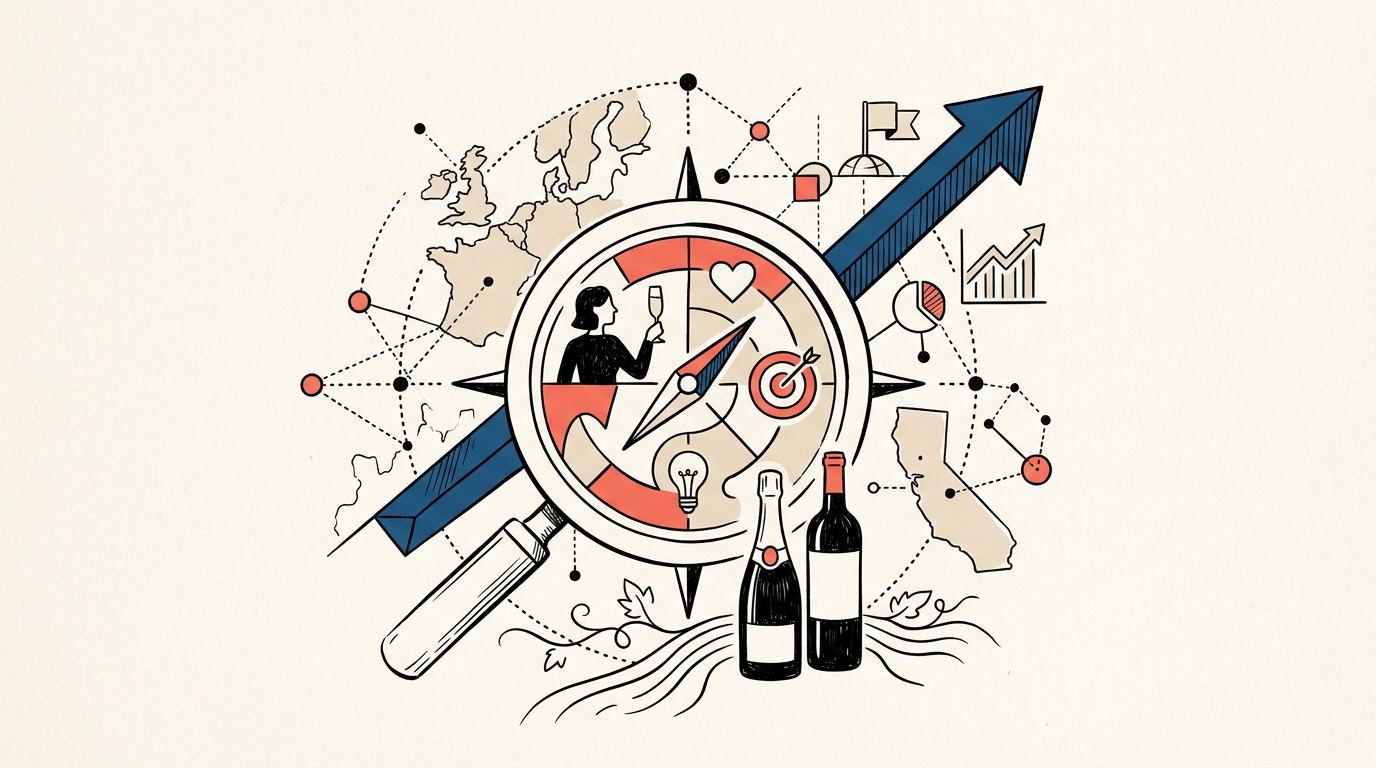
Strategic challenge
The questions that structured the work
Our approach
From analysis to usable decisions
Start from the company's real cases
Build exercises on decisions currently open in the houses rather than on generic cases. An external case is admired; an internal case is applied.
Name the current direction of reasoning
Make the habitual starting point visible — the plot, the product, the technique — without disqualifying it. You cannot change a habit you have not named.
Separate research, insight and implication
Install an operational distinction: what is observed, what it means, what it obliges you to decide. That path is what is most often missing.
Practise more than listen
Devote most of the time to exercises producing real deliverables. A capability is judged by what leaves the room, not by what entered it.
Leave a reusable format
Hand over materials the teams can re-run themselves, so that the capability does not depend on the trainer coming back.
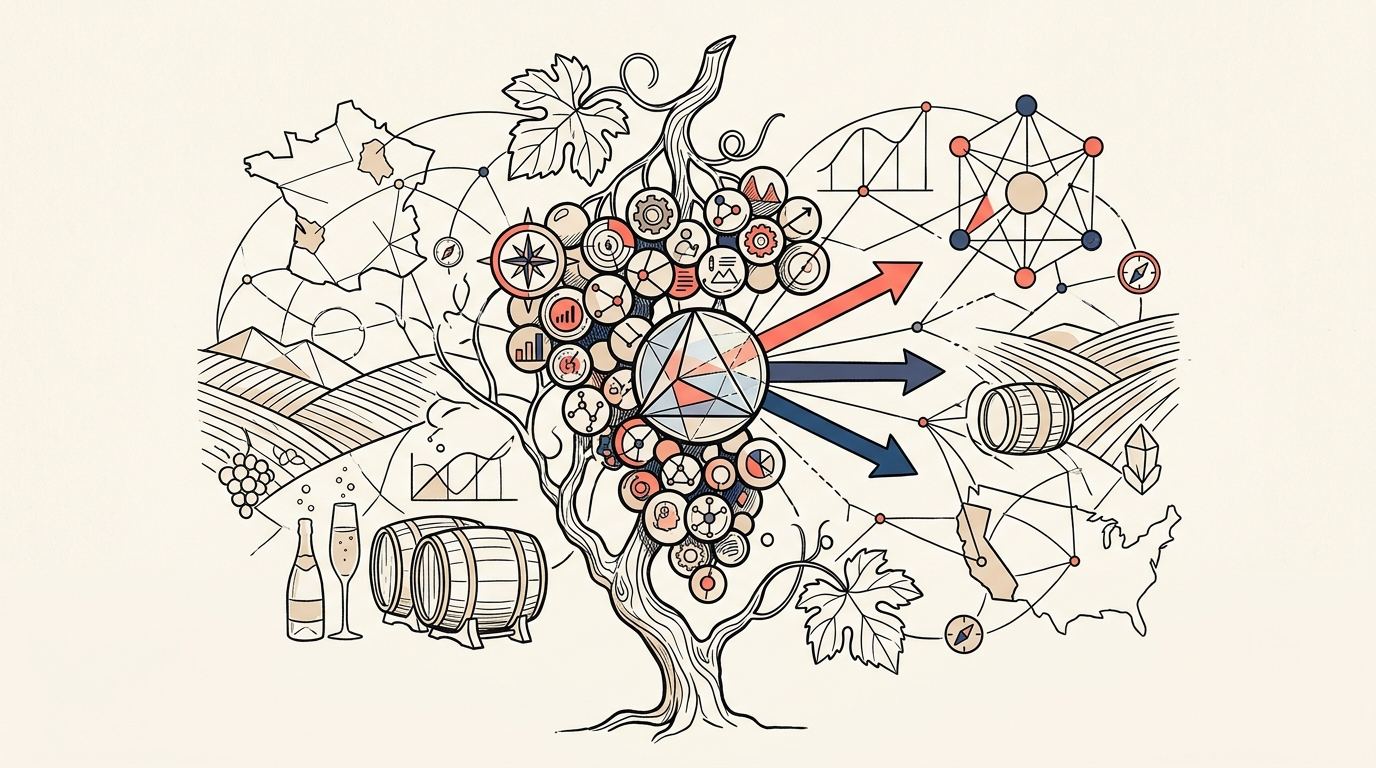
Research and work conducted
What the engagement covered
- The last question determines the design. Training is built from what participants will have to do without help, not from what needs explaining to them.
- The approach applied rests on one principle: you train from what teams will have to do unaided, not from what needs explaining.
- A legitimate product culture: The centrality of the vineyard is not a bias to correct but the source of quality. Any approach read as criticism would meet a justified refusal.
- Unused research: The data often already exists. What is missing is the path between observation and decision, not the volume of information.
- The diversity of the houses: An overly prescriptive framework would standardise brands whose value lies in their singularity.
- The return to routine work: The classic difficulty of training is not comprehension in the room but application three weeks later.
- The regulatory frame: Appellation and alcohol regulation restrict possible recommendations and have to be built into the exercises.
- Uneven levels: Teams in a multi-house group have neither the same experience nor the same means. A single programme risks losing some and boring others.
Business value
A reading that makes trade-offs easier
Data already paid for finally used
Installing the path from observation to decision makes existing research pay off at no additional cost.
Better-founded marketing decisions
Adding the consumer direction to the product direction widens the range of options considered before deciding.
Durable autonomy
A capability, unlike a recommendation, keeps producing after the engagement ends.
A shared language across houses
A common vocabulary reduces the time spent understanding one another before being able to decide together.
Deliverables
Objects teams can use beyond the engagement
- Training programmes built on the company's real cases.
- An operational distinction between research, insight and implication.
- An explicit path from observation to decision.
- Exercises producing deliverables usable after the session.
- A shared vocabulary compatible with each house's singularity.
- Materials the teams can re-run without outside help.
Key learnings
What this case makes clear
- Consumer centricity is not a technique but a reversal in the direction of reasoning.
- In a wine house, product culture is the asset: the task is to add a direction of reading, not replace one.
- Research describes, an insight explains, an implication commits a decision: the distinction is operational.
- What teams lack is rarely data, it is the path between observation and decision.
- An external case is admired, an internal case is applied.
- Training is designed from what participants will have to do unaided.
FAQ
Frequently asked questions
How do you train a marketing team in consumer centricity?
By starting from what the team will have to do unaided, not from what needs explaining. Exercises are written on decisions genuinely open in the business rather than on generic cases, most of the time goes to practice, and the session produces usable deliverables. The programme also has to name the current direction of reasoning explicitly — often product or technique — without disqualifying it, because you cannot change a habit you have not named.
Why is wine culture product-led?
Because a wine's identity is built upstream: the plot, the vintage, the grape varieties, the blend and the cellar master's work determine what will be in the bottle ahead of any market consideration. That direction of travel, from vineyard towards consumer, structures vocabulary, meetings and the criteria of professional pride. It is entirely legitimate: it is what produces the quality. Consumer centricity does not have to replace it, but to be added to it.
How do you make a consumer insight actionable?
By installing an explicit three-step path: the observation describes what people do, the insight explains why, the implication indicates what has to be decided. What teams most often lack is not data — research already exists and has been paid for — but that path. An insight leading to no implication remains an interesting remark; it only becomes useful at the moment it rules an option out.
What is the difference between research and an insight?
Research describes an observable behaviour: how many people buy what, when and where. An insight explains why that behaviour occurs, and its value is measured by what it allows you to decide. Confusion between the two explains much of the unused data in companies: descriptions are abundant and explanations scarce, whereas only the latter direct a decision.
How do you get a method adopted rather than a tool?
By making people practise more than listen, and by leaving a reusable format behind. A capability is judged by what leaves the room, not by what entered it: if the session produces real deliverables on live subjects, the method is already being applied before the programme ends. Handing over materials the teams can re-run themselves then prevents the capability from depending on the trainer coming back.