
Reference / Case study 22 / Beauty & luxury
Armani Beauty: in China, the point of sale and the media channel are the same object
The project covered the design and facilitation of an activation workshop intended to identify relevant retail opportunities and consumer engagement territories for Armani Beauty in the Chinese market.
- Client
- Armani Beauty
- Industry
- Beauty & luxury
- Expertise
- Activation strategy · Retail strategy · Workshop · Cultural insight
- Market
- China
- Geography
- Asia
- Engagement type
- Design and facilitation of an activation workshop to identify retail opportunities and engagement territories
- Consultant
- Aurélie Plessier
- Case No.
- 22
- LED AT
- Brainvalue, June Marketing, Labbrand
Context
Armani Beauty: in China, the point of sale and the media channel are the same object
The brief distinguishes two objects — retail and engagement — that most organisations handle in two separate directions, with two budgets and two teams. In China that separation does not hold. A livestream is simultaneously a shop, a show and a conversation. The place where you discover, the place where you discuss and the place where you buy are the same screen, in the same minute.
This case describes what that fusion changes for a luxury beauty brand, and why an activation designed on Western logic produces disappointing results there. The opportunities identified, the conclusions and proprietary client data are not disclosed.
A vast market in recomposition: The Chinese cosmetics market exceeded RMB 1.1 trillion in 2025, with an estimated rebound of around 5% on 2024 after several years of constrained growth. Two figures sum up the situation for an international brand: domestic brands hold around 57.4% of the market, and online commerce accounts for around 65.4% of sales.
In other words, most of the market belongs to local players, and most sales happen on platforms. An international luxury brand is a guest twice over.
The shift between platforms: The digital landscape has reconfigured. Douyin overtook Tmall as the leading beauty sales channel in several categories across 2025 and 2026, with beauty revenue approaching RMB 20 billion in July 2025 alone, up around 31.7% year on year, and livestream gross merchandise volume exceeding RMB 800 billion over the year.
Xiaohongshu gathers more than 200 million users, predominantly women under twenty-six — a population closely matching the audience for imported cosmetics. The difference between these platforms is not only one of audience: Douyin carries impulse purchase born of discovery, whereas search-based commerce works differently.
Local competitors who have changed ground: Domestic brands — Proya, Florasis, Yatsen's Perfect Diary, Winona — have moved from price competition to differentiation through formulation and heritage narrative. The clearest signal: Proya overtook L'Oréal Paris in several skincare categories on Tmall in 2025.
A slowdown in luxury spending compounds this, while science-based skincare advances. For a luxury beauty brand, the question is therefore no longer only how to be desirable, but how to be findable and defensible in an environment where the local narrative has become competitive.
A Western separation that does not work: Western organisations structurally separate three functions: retail, which sells; media, which creates awareness; customer relations, which retains. Three teams, three budgets, three calendars.
In China those three functions occur within the same object and often within the same minute. A livestream is a place of sale, a broadcast and a live exchange. A post on a recommendation platform is simultaneously content, a review and a purchase entry point. A conversation in a messaging group is customer service, a community and an ordering channel.
The real challenge of the engagement: The likely strategic challenge was therefore to identify retail opportunities and engagement territories by thinking them together, rather than translating a plan conceived elsewhere.
Luxury facing immediacy: A difficulty specific to luxury beauty compounds this. Livestreaming runs on energy, urgency and often promotion. A luxury house is built on rarity, control and duration. Occupying these channels without adopting their reflexes is a constant balancing act: too much restraint and the brand becomes invisible, too much adaptation and it loses what justifies its price.
The counter has not disappeared: Despite the dominance of online commerce, the physical point of sale retains a function the screen does not perform: trial, advice, diagnosis, gesture. The question is not to choose between the two but to define what each does that the other cannot.
The workshop was framed around questions of this kind:
In China you do not go to a platform to buy what you were looking for. You buy what you were not looking for, while watching something else.
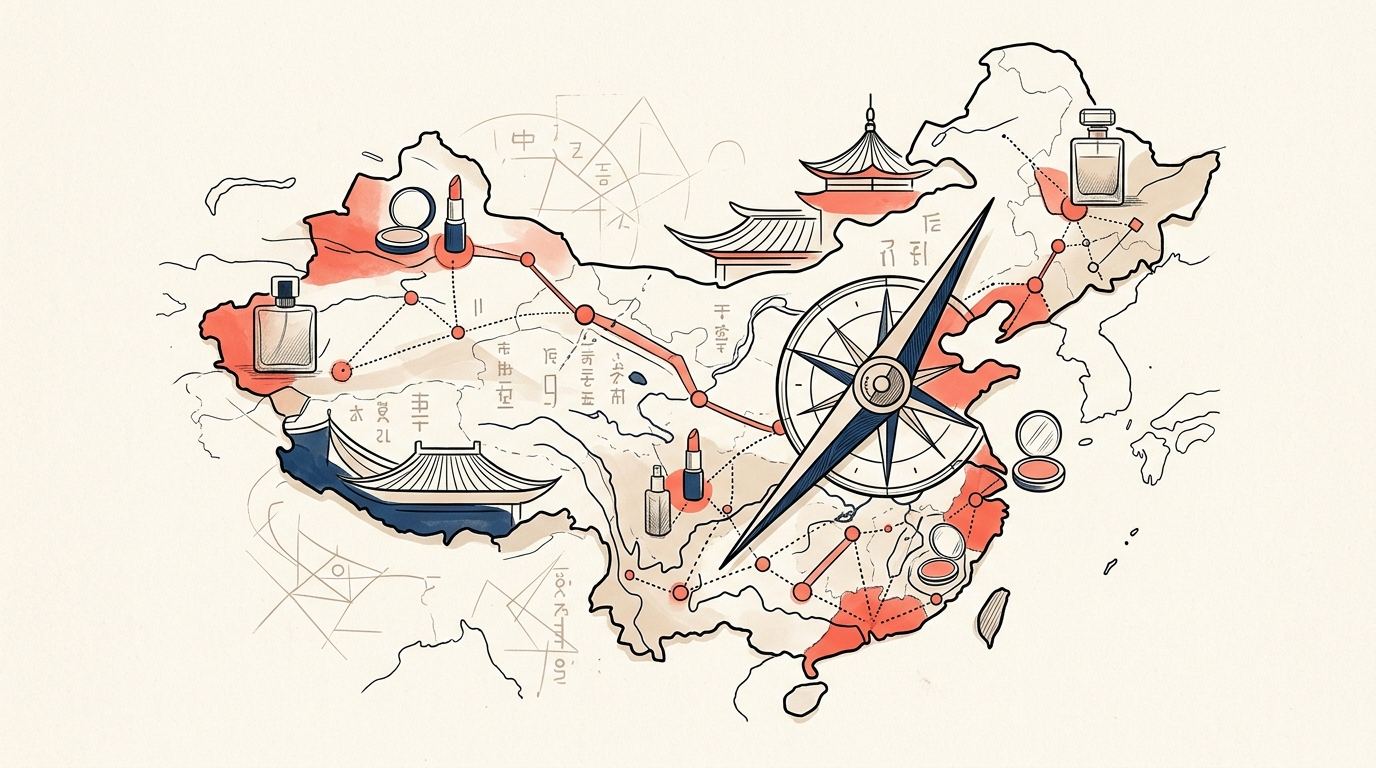
Strategic challenge
The questions that structured the work
Our approach
From analysis to usable decisions
Map the journey as it is, not as imagined
Reconstruct the real sequence between discovery, discussion, trial and purchase in the Chinese market. The Western journey, sequential and linear, does not describe what happens there.
Treat retail and engagement as one object
Stop designing the place of sale and the content separately. An effective Chinese design does both at once, and is therefore conceived in one go.
Define what physical does alone
Assign the point of sale what the screen cannot produce — trial, diagnosis, gesture, material — rather than asking it to reproduce what digital does better.
Set the limits of luxury before opening up
Define what the House will not do on these channels before exploring what it could. Without that boundary, the workshop produces activations that are effective and incompatible with the brand.
Rank by testability
Separate what can be tried in weeks from what requires organisational change. In such a fast-moving market, speed of learning is worth more than the accuracy of the initial plan.
Research and work conducted
What the engagement covered
- The last question frees up the most resource. A significant share of activation budget in China funds designs built for markets where the purchase journey is sequential.
- The approach rests on one principle: in China you do not design an activation from the available channels but from how discovery and purchase actually chain together.
- Importing Western frameworks: An activation plan conceived elsewhere assumes a sequential journey: awareness, consideration, purchase, retention. That division does not correspond to an environment where all four occur in the same flow.
- The speed of landscape change: The relative positions of platforms shift quickly. A strategy built on the current hierarchy of channels will be partly obsolete within eighteen months; you therefore have to reason in roles rather than in platform names.
- The tension between luxury and promotion: The most effective mechanics on these channels often rest on urgency and price advantage. Adopting them without limit erodes perceived value; refusing them outright leads to invisibility.
- The rise in quality of domestic brands: Local players are no longer economical alternatives but competitors differentiated by formulation and by heritage narrative. The argument of international origin is no longer sufficient.
- Internal organisation: Designing activations that merge retail, media and customer relations requires those teams to work together. That is often the heaviest constraint, and it is organisational before it is strategic.
- The heterogeneity of the country: Tier-one and emerging cities, generations, income levels: speaking of a Chinese consumer in the singular produces messages that land nowhere.
Business value
A reading that makes trade-offs easier
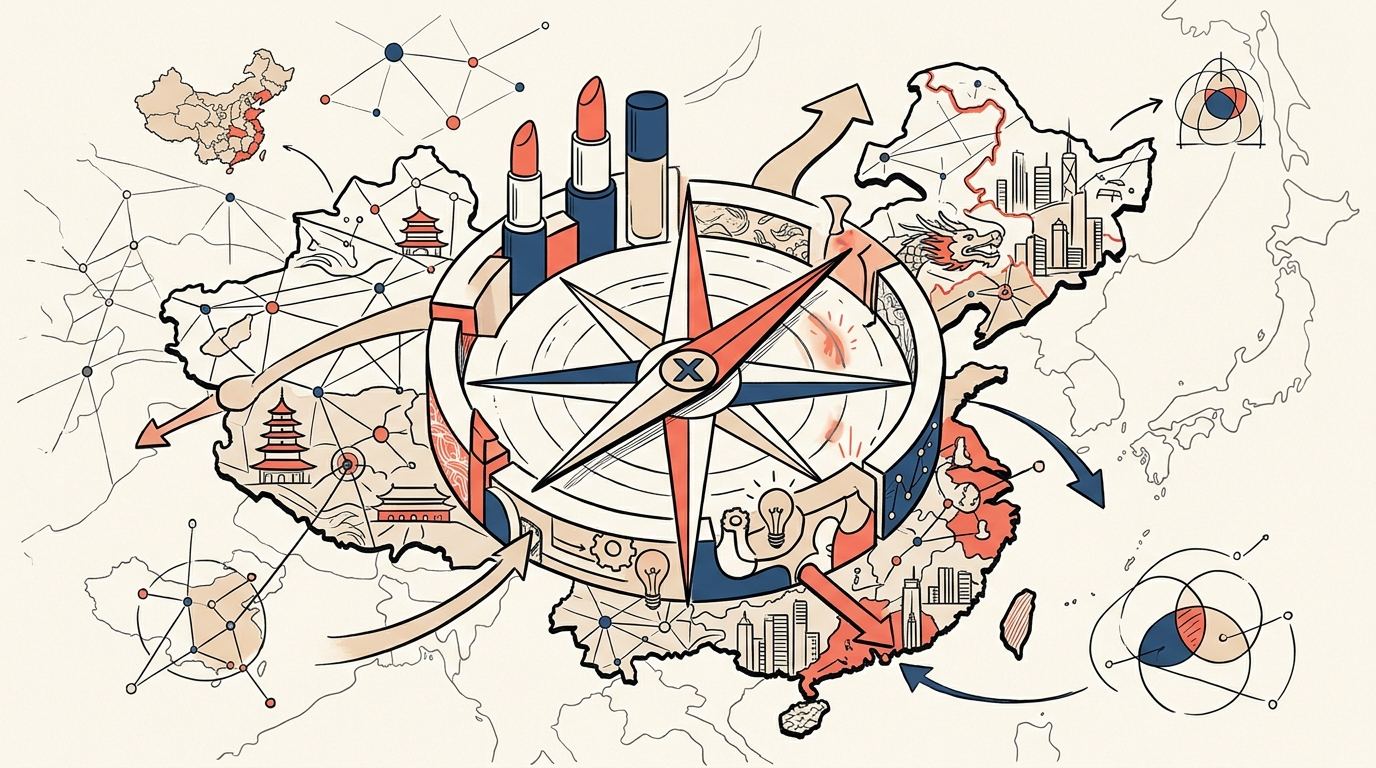
No longer funding the same moment three times
Designing retail and engagement together avoids splitting across three budgets a consumption moment that forms only one.
A presence that does not devalue
Setting the limits before exploring allows high-performing channels to be occupied without adopting mechanics that erode a luxury house's perceived value.
Learning faster than the market
Ranking by testability allows learning at the pace of a fast-recomposing market, rather than executing a plan built for a landscape that has already changed.
A clarified role for physical retail
Assigning the counter what the screen cannot do restores a function to the point of sale instead of making it compete with digital on digital's own ground.
Deliverables
Objects teams can use beyond the engagement
- A map of the real discovery and purchase journey in the Chinese market.
- An allocation of roles between platforms, expressed as functions rather than names.
- A definition of what the physical point of sale contributes that the screen cannot.
- Consumer engagement territories allowing a relationship beyond the transaction.
- Retail opportunities designed jointly with their content dimension.
- A statement of the limits the House sets itself on these channels.
- A ranking of routes by speed of testing and degree of transformation required.
Key learnings
What this case makes clear
- In China the point of sale and the media channel are the same object. Separating them means funding the same moment three times.
- The Western sequential purchase journey does not describe what happens in this market.
- A strategy built on the current hierarchy of platforms dates quickly. Reason in roles, not in names.
- Domestic brands are no longer economical alternatives: they differentiate through formulation and narrative.
- A luxury house must set its limits before exploring these channels, or it will produce activations that are effective and incompatible with it.
- In a market that recomposes every eighteen months, speed of learning is worth more than the accuracy of the plan.
FAQ
Frequently asked questions
How does beauty retail work in China?
Differently from the West, principally because commerce and content are not separate. Online commerce accounts for around 65.4% of cosmetics sales, and Douyin overtook Tmall as the leading beauty channel in several categories across 2025 and 2026, with livestream gross merchandise volume above RMB 800 billion over the year. A livestream there is simultaneously a point of sale, a broadcast and a conversation. The physical point of sale retains a distinct function — trial, advice, diagnosis — but it is no longer the centre of the journey.
Why is livestreaming a point of sale in China?
Because it brings together in one moment what other markets separate: discovery, demonstration, conversation with a host and payment, without changing screen or application. Purchase there is not born of a search but of exposure: you buy what you were not looking for, while watching something else. That characteristic makes the Western division between awareness, consideration and conversion inoperative, and requires the commercial design and the content to be conceived in one go.
How does a luxury brand activate in the Chinese market?
By setting its limits before exploring the channels. The best-performing livestream mechanics often rest on urgency and price advantage, which erode a luxury house's perceived value. Refusing them outright, however, leads to invisibility on channels carrying most of the sales. The approach is to define explicitly what the House will not do, then to look within those boundaries for formats that allow these spaces to be occupied without adopting all of their reflexes.
What is a consumer engagement territory?
It is a space of lasting relationship between a brand and its audience that is not reduced to a transaction. It defines what the conversation is organised around — a craft, a ritual, a community of interest, a service — and on which supports it takes place. The difference from a campaign is continuity: a campaign occupies a moment, an engagement territory structures a relationship that continues between commercial moments. In a market where platforms merge content and commerce, that is what distinguishes a presence from mere promotional activity.
Why are Chinese brands taking share from international luxury?
Because they have changed ground. Domestic players — notably Proya, Florasis, Perfect Diary and Winona — have moved from price competition to differentiation through formulation and a local heritage narrative. They now hold around 57.4% of the market, and Proya overtook L'Oréal Paris in several skincare categories on Tmall in 2025. For an international house that means the argument of origin is no longer sufficient: preference is won on demonstration, narrative and the quality of the relationship.