Reference / Case study 01 / Natural health
Arkopharma: reading the category to clarify a natural-health brand position
A June 2021 semiotic analysis of Arkopharma and a benchmark of French and international competitors, designed to clarify the category's codes and the brand's current position.
- Client
- Arkopharma (Laboratoires Arkopharma)
- Industry group
- Health & Life Sciences
- Industry
- Pharma, herbal medicine and food supplements
- Expertise
- Brand positioning and semiotic analysis
- Scope
- French and international competitor benchmark
- Engagement
- Brand analysis and comparative benchmark
- Date
- June 2021
- LED AT
- June Marketing
Context
Starting with the category before defining the route
Arkopharma wanted a rigorous reading of its own brand positioning, using the same analytical grid previously applied to the category's principal and most inspiring competitors.
The engagement examined the verbal and visual signals sent by Arkopharma across its touchpoints. The aim was not to judge a logo or a campaign in isolation, but to capture the system of meaning that the brand builds through its language, proof points, imagery, product stories and relationship with people.
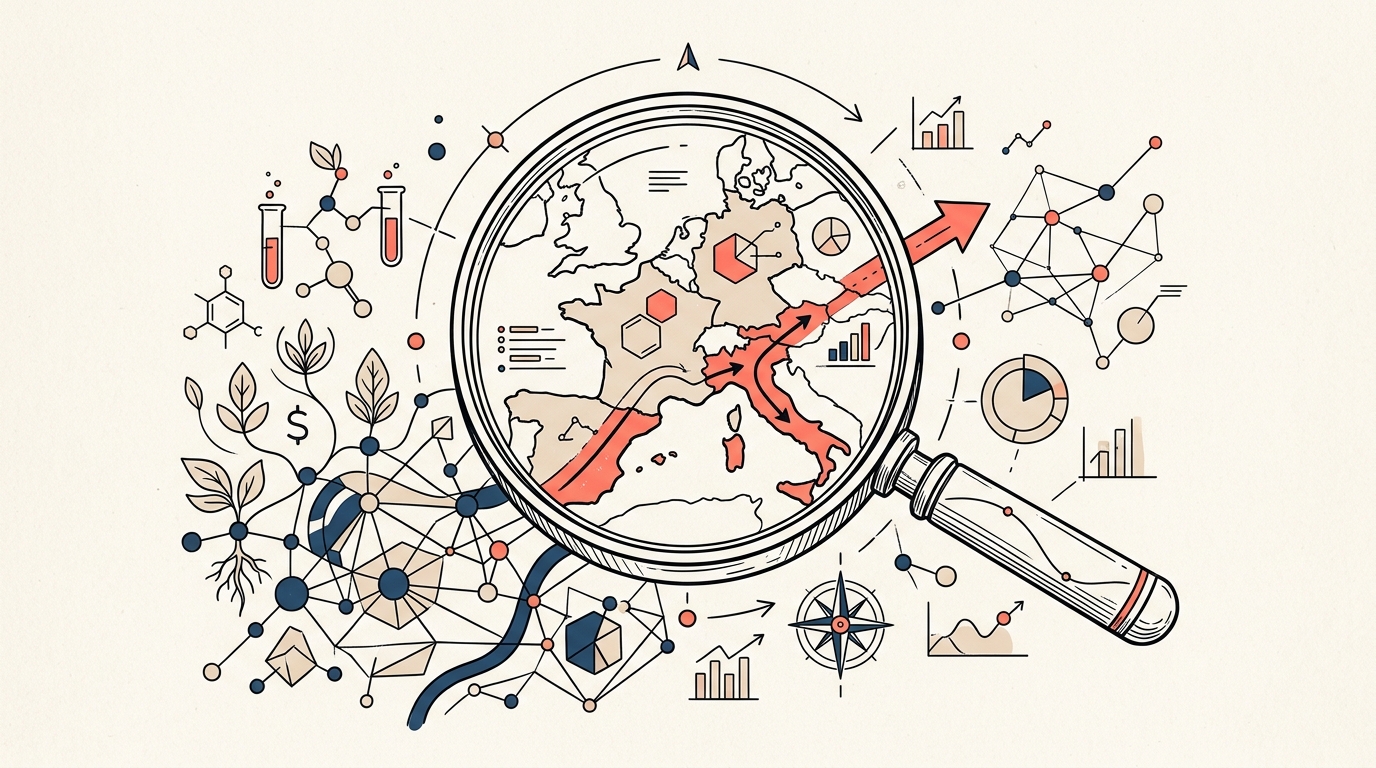
Alongside the Arkopharma deep dive, the benchmark covered a selected set of French and international brands in natural health. The work excluded packaging and focused on the communication system visible across digital and editorial touchpoints.
A positioning becomes clearer when it is read as a system of signals - not as a collection of individual messages.
Market reading
Four recurring territories in natural health
The benchmark identified four broad ways brands organise their relationship with nature, science, care and consumers. These territories are analytical lenses, not fixed labels for every brand.
| Territory | Core belief | Typical expression |
|---|---|---|
| The Naturopaths | Plants have healing properties and health is best understood holistically. | Herbal-medicine knowledge, preservation processes and the acknowledged contribution of health professionals. |
| The Botanists | Studying plants reveals what they can do for people. | Scientific codes, concentrated extracts, educational content and an effort to make natural ingredients more accessible to everyday life. |
| The Gold Miners | Nature is the best source of health when rigorously selected and transformed. | Fields and natural raw materials, demanding research, proof points and a strong national anchorage. |
| The Neo | Nature is rich and powerful, but its wealth must be protected. | Purpose, responsible production, more creative depictions of ingredients and often a human or family story. |
Competitive landscape
The category is structured by a few recurring tensions
The comparative analysis made three tensions explicit. First, brands vary in the relative importance they give to natural care and to science or medicinal care. Nature is present everywhere, but it does not play the same role in every story.
Second, consumer centricity is uneven. Some brands foreground the benefits, daily life and autonomy of people; others foreground their own history, ingredients, processes and expertise. Third, ingredient stories and benefit stories are usually connected, although each can dominate the communication system.
Strategic challenge
Making Arkopharma's present signals more legible
The task was to understand how Arkopharma's existing positioning read in relation to the category, and to identify the tensions between the brand's stated mission, the proof it foregrounded and the emotional connection it created with consumers.
The analysis found a French leader-pharma-lab position, with a strong activist ambition around natural medicine. It also observed a very rational, proof-led discourse, an academic teacher-learner posture and a relatively limited connection to consumers' lived reality across the touchpoints reviewed.
The questions that structured the work
Our approach
A semiotic, systemic reading across touchpoints
The work used one comparative grid to move from isolated brand messages to the underlying systems and patterns of the category.
Select the comparison set
Bring together principal and inspiring French and international competitors across the natural-health category.
Read the communication system
Review verbal and non-verbal communication across touchpoints, while deliberately excluding packaging from the scope.
Analyse every brand on the same grid
Study positioning, vision, mission, narratives, proof points, representation of nature, science and the consumer relationship.
Identify systems and patterns
Move from individual observations to the recurring category territories and the tensions that organise the market.
Read Arkopharma in context
Apply the same analysis to Arkopharma to make its current position, assets and tensions visible against the competitive landscape.
Research and analysis
What the two deliverables covered
The June 2021 work comprised a competitor benchmark and an in-depth Arkopharma brand analysis.
- A benchmark of brands including Phytostandard / PiLeJe, Naturactive, Nat&Form, Solgar, Aboca, Forté Pharma, Juvamine, Puressentiel, Santé Verte, Nutri&Co and Aroma-Zone.
- A semiotic analysis of each selected brand's verbal and non-verbal communication across touchpoints, excluding packaging.
- A review of brand visions and missions, category narratives, nature and science codes, rational and emotional registers, and consumer versus brand centricity.
- An in-depth reading of Arkopharma's leadership position, activist mission, scientific validation, academic posture, advice ecosystem and nature representation.
- A comparative synthesis of four category territories and three cross-category axes: naturality versus medicinal care, consumer versus brand centricity, and benefit versus ingredient stories.
Business value
A shared language for positioning work
No proprietary recommendations or performance results are disclosed. The deliverables show how a structured competitive reading can make strategic discussion more precise.
A clearer category map
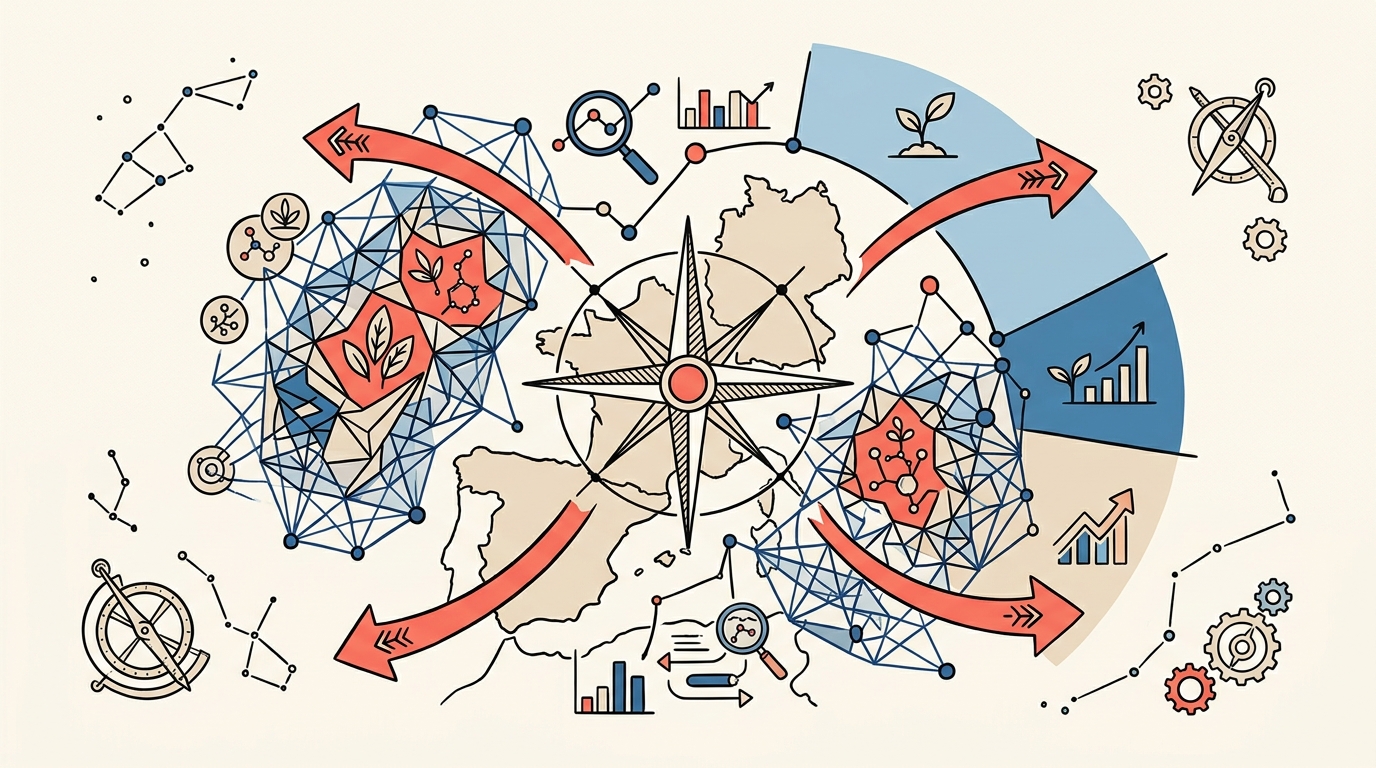
The four territories turn a crowded field of brands into a legible set of beliefs, codes and communication styles.
A more precise view of distinctiveness
Comparing nature, science, proof, benefits and consumer connection helps separate distinctive assets from widely shared category conventions.
A basis for internal alignment
One shared grid helps leadership, marketing, creative and innovation teams discuss the same positioning question with more precision.
A route from observation to action
Making the distance between mission, value proposition and touchpoint expression explicit gives future positioning work a grounded starting point.
Deliverables
Two complementary documents for positioning work
- A benchmark of French and international competitors in natural health.
- A competitor-by-competitor semiotic reading using one comparative analysis grid.
- A cross-analysis defining four recurring territories of naturality.
- Three positioning axes covering the role of nature and medicinal care, consumer centricity, and the relationship between benefits and ingredients.
- An in-depth analysis of Arkopharma's own verbal and visual signals across touchpoints.
- A synthesis of Arkopharma's current positioning, proof system, posture and communication tensions.
Key learnings
What this case makes clear
- In natural health, nature is a shared resource, but the story brands build around it can be radically different.
- Scientific proof can support a strong leader position, yet a highly academic posture can distance a brand from consumers' daily lives.
- Ingredient, benefit and process stories work best when their relationship is clear rather than competing for attention.
- A category benchmark is more useful when it reveals systems and tensions, not only a list of competitors.
- A brand's stated mission needs to be recognisable in the everyday expression of its touchpoints.
FAQ
Frequently asked questions
What is a semiotic brand analysis?
It studies the signs a brand sends - language, imagery, stories, proof points and recurring codes - to understand the system of meaning created across touchpoints.
Which brands were included in the Arkopharma benchmark?
The June 2021 benchmark reviewed a selected group of French and international competitors and inspiring brands, including Phytostandard / PiLeJe, Naturactive, Nat&Form, Solgar, Aboca, Forté Pharma, Juvamine, Puressentiel, Santé Verte, Nutri&Co and Aroma-Zone.
What did the benchmark identify?
It identified four broad territories - The Naturopaths, The Botanists, The Gold Miners and The Neo - and compared how brands balance nature, medicinal care, consumer centricity, benefit stories and ingredient stories.
What was analysed for Arkopharma?
The work examined Arkopharma's verbal and visual communication across touchpoints, including its stated mission, scientific proof points, advice posture, nature representation and the relationship it creates with consumers. Packaging was outside the scope.
Why compare brands on one analytical grid?
A shared grid makes patterns visible. It helps teams see whether a code is distinctive or generic, and whether a brand's mission is consistently expressed through its everyday communication.